Our active escape party: Zombies, chaos & Lord of the Flies

How to entertain 9-year-old boys for 4 hours?

With a zombie-themed Active Escape Party — blending outdoor games, teamwork, and storytelling.
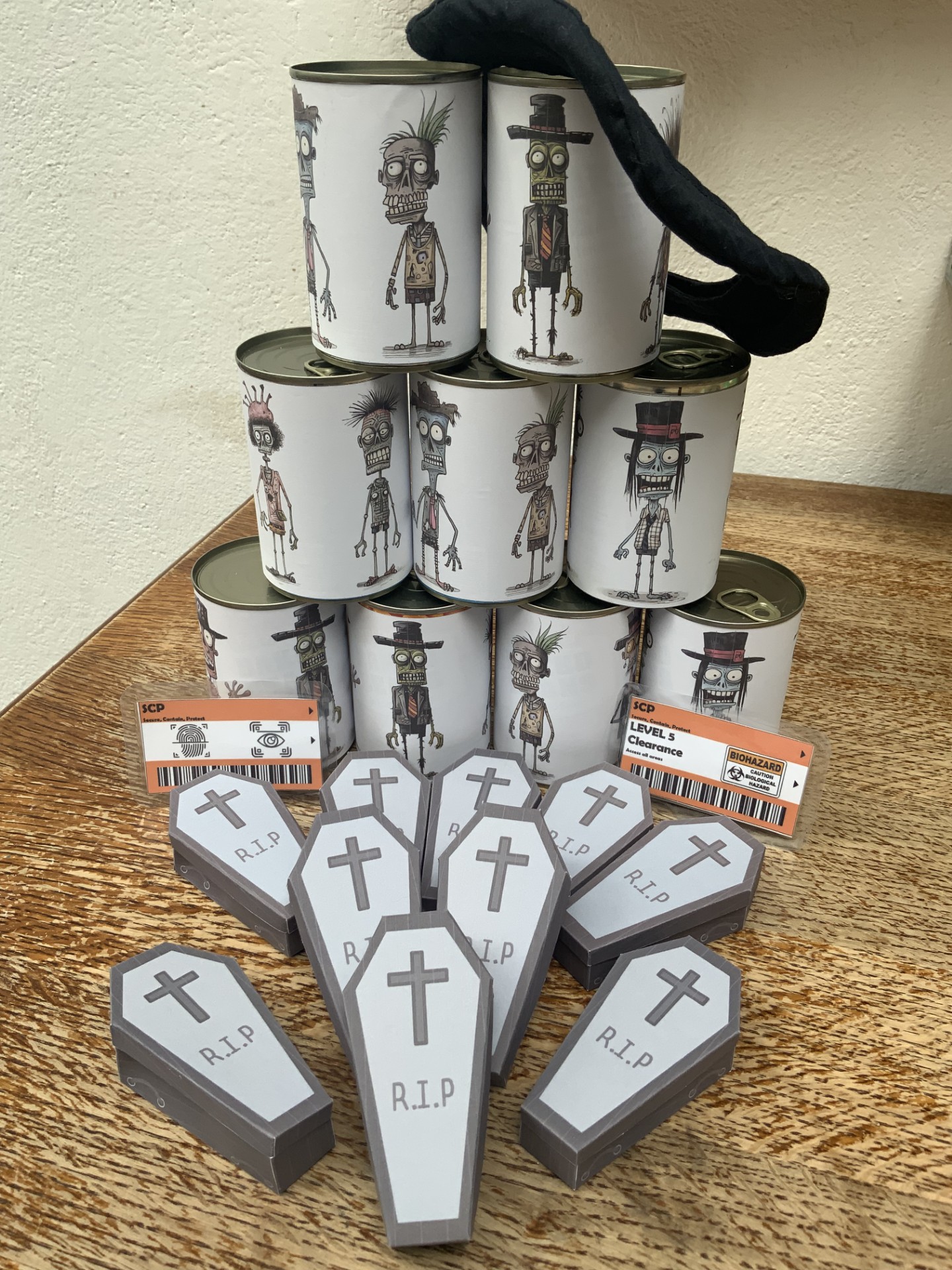
For about three weeks, my brain has been hijacked by Zombie party planning.

Nowadays, kids’ birthdays come with big expectations — and can sometimes feel like a competitive sport. I’m all for putting in effort to make an occasion memorable, but I’m less keen on it being about boatloads of presents, and I don’t have the budget for high-expense venues. So, as my son’s birthday approached, I started to consider what options I had for a 9-year-old’s party.

While I love escape rooms, my son has enough trouble sitting still at school — asking him and his friends to concentrate on traditional puzzles for his birthday just wasn’t going to work. At the same time, I wasn’t about to trust them with four hours of unstructured free play that might spiral into chaos.

Free play is a wonderful thing — but when you’re the adult responsible, especially in a second language you’re not fluent in, figuring out when to step in (and when not to) is a delicate balance.

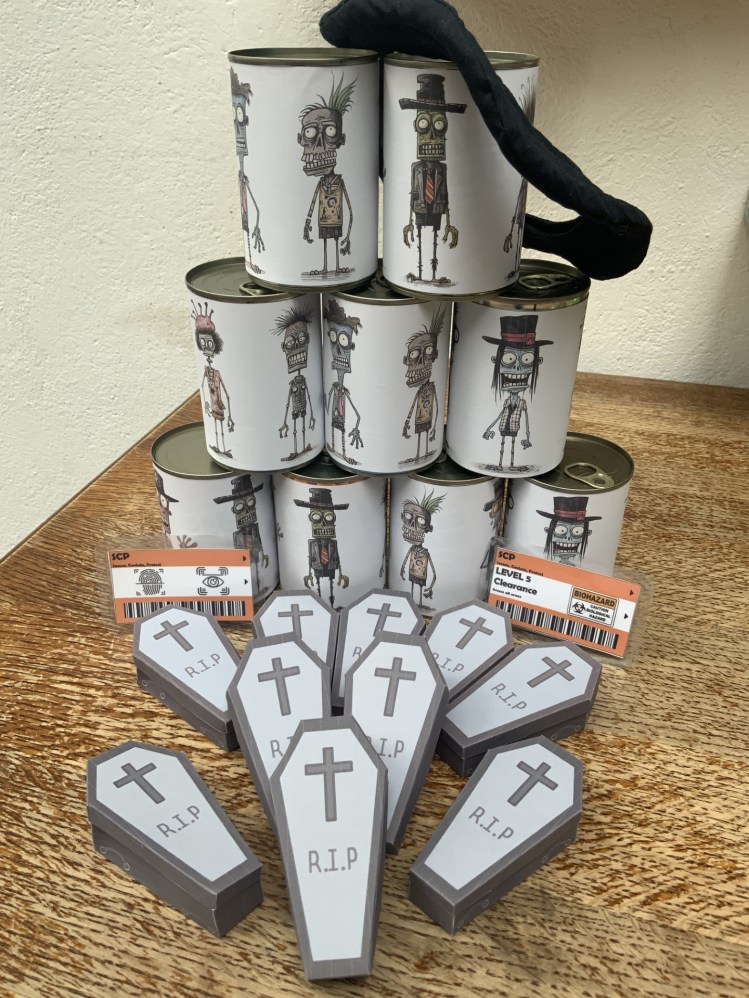
So instead, I leaned into the chaos and spent three weeks planning our Zombie-themed Active Escape Party.

Did it go exactly as planned? No. Are we exhausted and slightly mentally bruised? Absolutely. But it was a resounding success.

There were moments that felt eerily like something from Lord of the Flies — chanting and battle cries around the campfire — but it was also fascinating to watch the boys self-regulate as a group. Exhausting, yes. Worth it? 100%.

What is an active escape party?

An Active Escape Party is kind of like an escape room, but outdoors and on the move. A blend of physical games, group challenges, and storytelling, with no locked rooms or puzzles that require too much sitting still.

I wanted something that mixed high-energy fun with some cooperation, light problem-solving, and imaginative play, without relying on tech or expensive venues.

Think: scavenger hunts, mini missions, mystery-solving, and physical challenges all tied together by a loose story (in this case: curing a zombie virus).

How it all came about

The whole thing was almost accidental. Last year, we invited 6 boys, but only 4 showed up. They spent 6 hours building pillow forts, flinging water balloons, shooting bows, and running wild on a DIY quad track my husband mowed into the long grass. It was gloriously chaotic.

Even during that chaos, the shrieking red-faced boys were still creating stories to propel the games forward and keep them engaging.  

This year, after attending a string of ‘contained-fun’ parties, we briefly looked into renting a play space or hiring a bouncy castle. But the prices? Let’s just say that made our decision easier.

So we gave our son a choice:

  • A big party with the whole class (21 kids)
  • Or a smaller party at home with a better present

He chose ‘small’ and zombie-themed — probably helped by the fact we’ve been reading The Last Kids on Earth series. Once I mentioned zombies, it was game on.

Planning the Zombie escape

I knew chaos was coming, but I wanted to channel it — not fight it. A few guiding principles helped:

  1. No killing zombies: Like in the Last kids on Earth books, zombies were once people, I did not want to promote violence. So the aim was to cure, not destroy.
  2. No winners or losers: Everyone works together toward a common goal — sequencing the zombie virus DNA to create a cure.
  3. Minimal waiting around: Group games where everyone could move, collect, or hunt.
  4. Alternate energy levels: Big games > focused task > big game > repeat.
  5. Know your audience: These are 9-year-old boys. Saturday. High sugar. Low attention span.

The structure (more or less)

We ran the party over 4 hours, loosely structured like this:

  • 1.5 hours of games (one every 10–15 minutes)
  • 0.5 hour food break
  • 1.5 hours of more games
  • 0.5 hour of free play (mostly fire poking and wrestling)

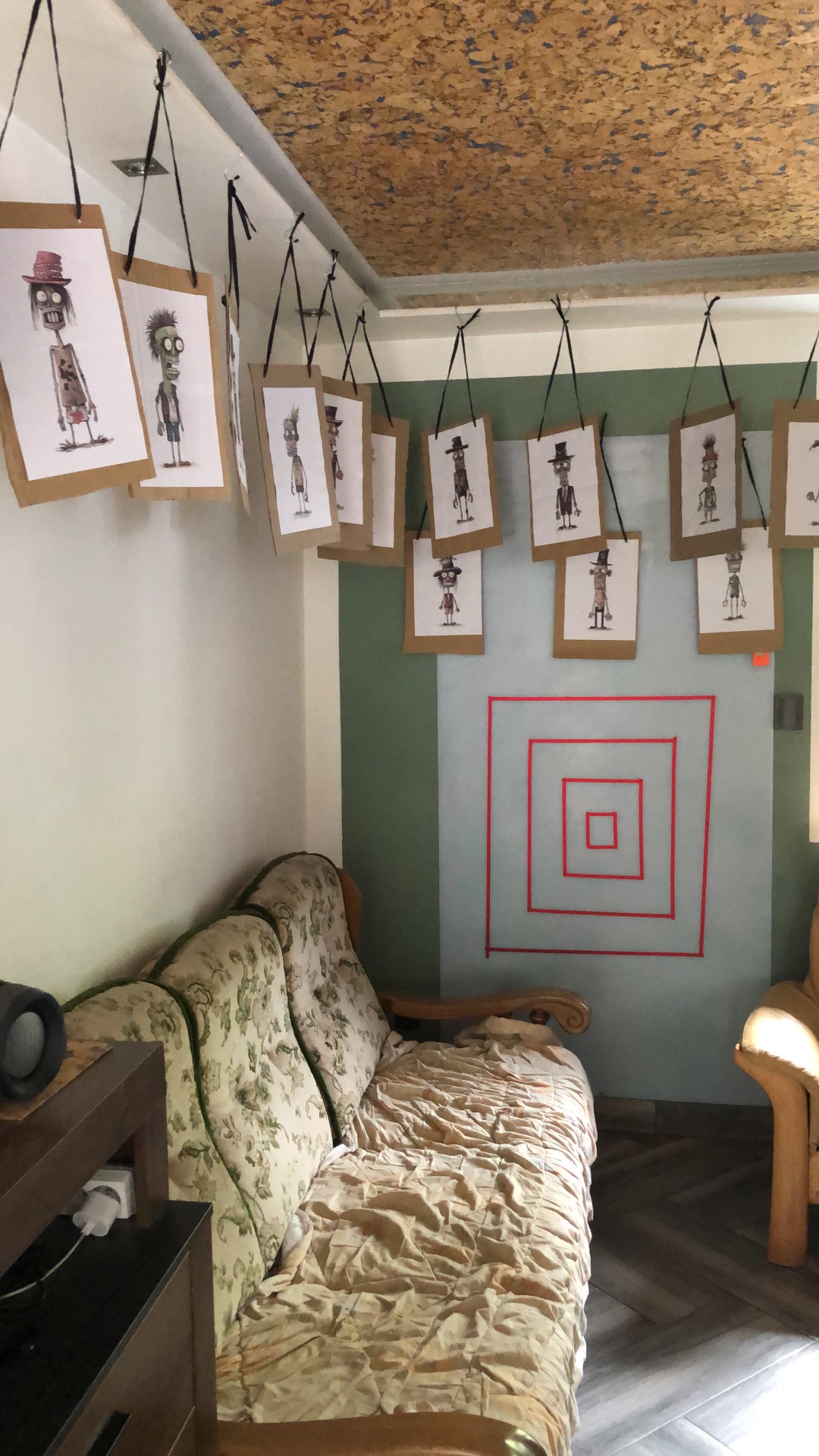
I created a mix-and-match set of zombie games, so we could pivot depending on mood, energy levels, or small acts of rebellion.
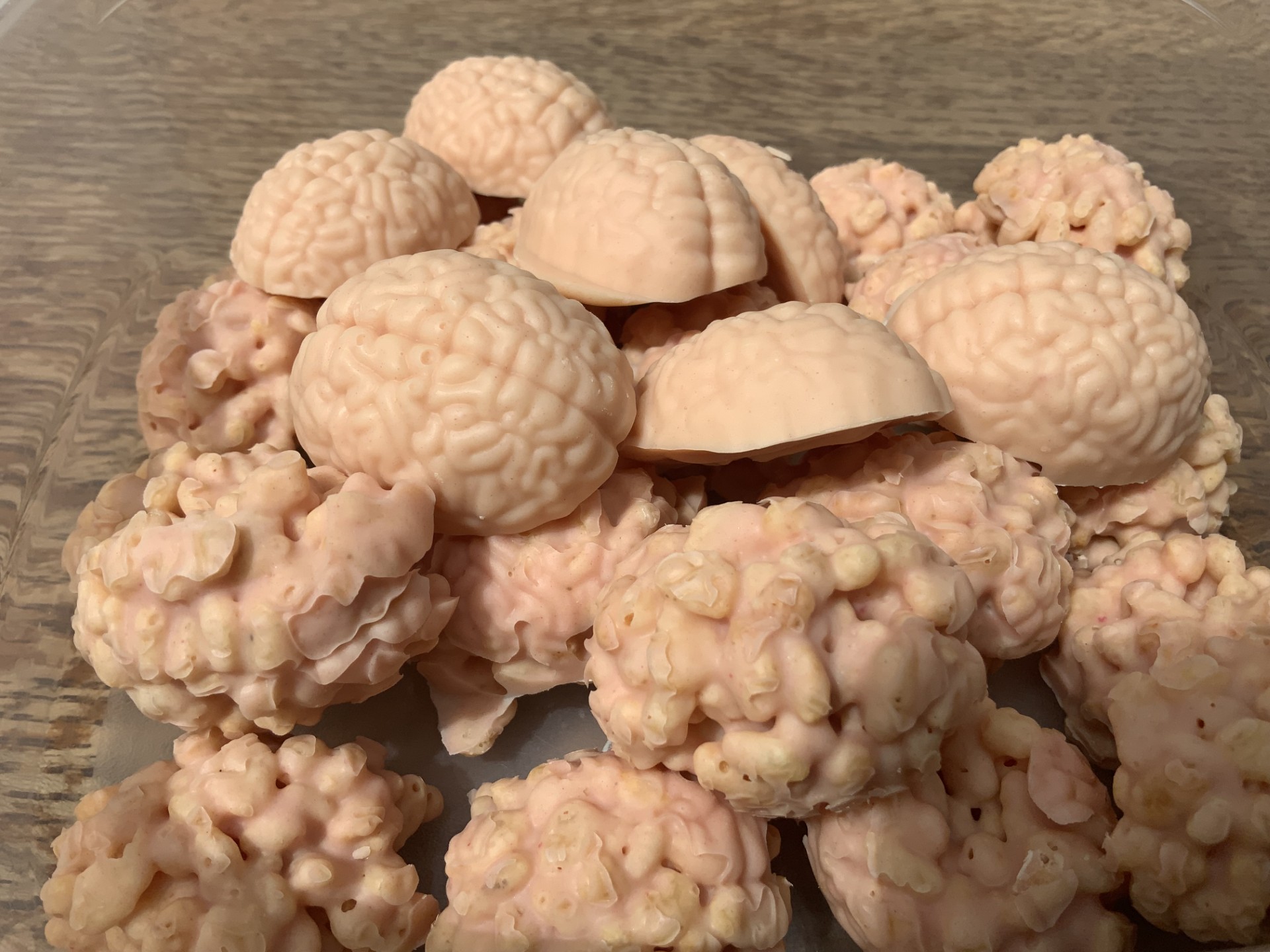
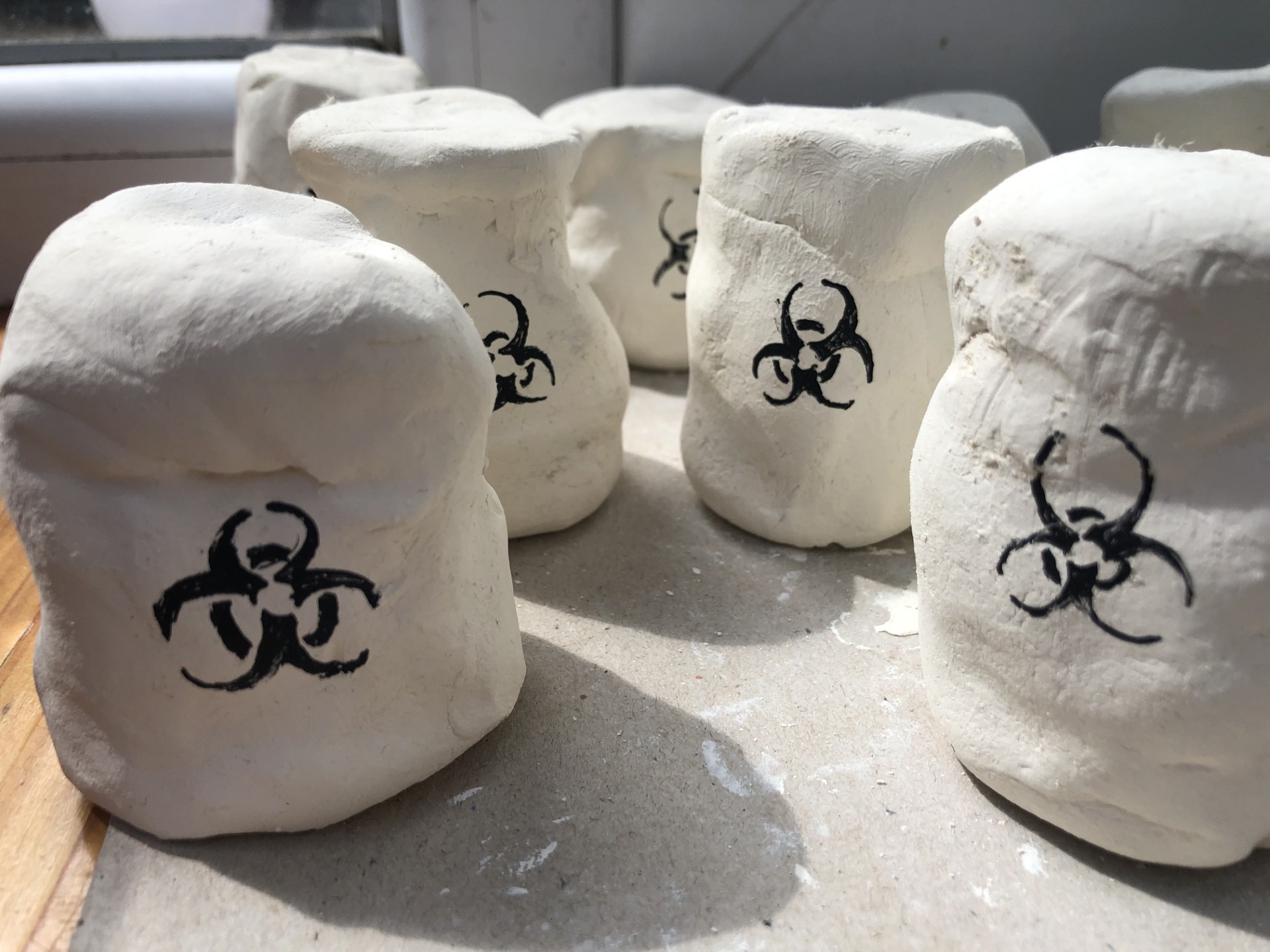
⚠️ I did way more prep than we actually used, but if you’d like to skip at least some of that and run your own version, I’ve made the storyline and game ideas available in a free PDF you can download.

What worked (and what we learned)

  • Hunting, finding, and smashing things = massive hit
  • Defined zones help keep the game sequence flowing and ‘herd’ the kids towards the campfire area
  • Let them self-regulate during free play — we stepped in only when absolutely necessary (and even then, just a quick nudge)
  • Mind your adult-to-kid ratio; we had two adults for 9 boys. There are plenty of guidelines on the internet, but in an informal setting, I would err on the side of caution.  

Was it perfect?

No.
Did I stress needlessly over details? Yes.
Did they notice the 30% that went “off-script”? Not at all.
Would I do it again? Sigh… yes. In fact…

Next year…..

We said “never again,” but I’m already plotting a DIY geocaching active escape for a smaller group. We’ll set up a route the day before, hide clues, and let the kids work their way to a final destination: a campfire with sausages before home time.

It’ll be away from the house and hopefully even more tiring as there is an actual route to complete. But I will also limit the numbers to 4-6 boys in total.

Good luck

If you decide to host your own, just don’t forget the snacks, firepit, or most importantly your mental resilience.
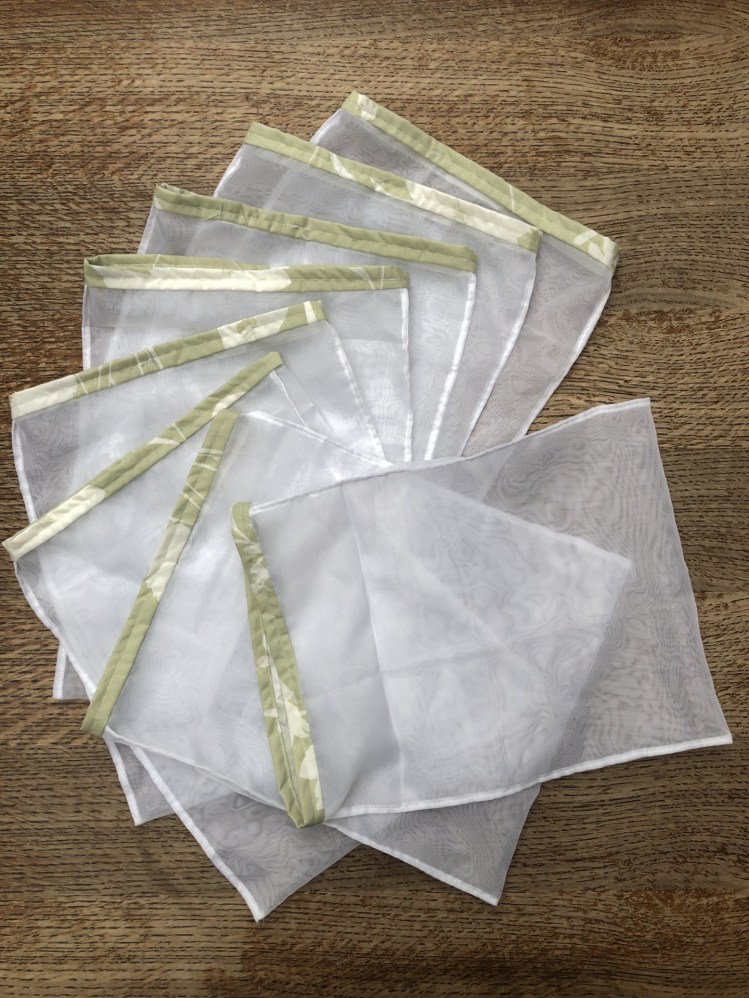
Unexpected bags in the crafting area

Unfinished business and incomplete checkouts

A curtain, a sewing machine, and eight well-meaning produce bags walk into a supermarket…

The bags that started it all

Not to be dramatic, but y-e-a-r-s ago I made a batch of cinch-and-roll produce bags—back when that pattern was still free. I loved them. They had a cute little flower print and loops to close them up. But then self-checkouts happened.

At first, you could avoid them if you wanted to. But now? Waiting in the queue for a human checkout just isn’t how I want to spend my time, though, to be fair, my imagination does keep me company wherever I am.

Then came the cameras. Instead of just selecting your veg and being believed, there were little surveillance thingies watching your every apple. Honestly, it feels like the whole system is set up to nudge you back toward using single-use plastic bags—which are still available where I live.

Plans, plots and paranoia

For a while, I’ll admit, I was bitter. My cute little bags sat unused. I daydreamed about making new and even cuter ones—with drawstring ribbon, black floral binding and those handy handles. But then I remembered the cameras. Anything with high contrast or “unusual” details might trigger the system. So I did nothing.

Until I couldn’t take it anymore.

Mass production without testing

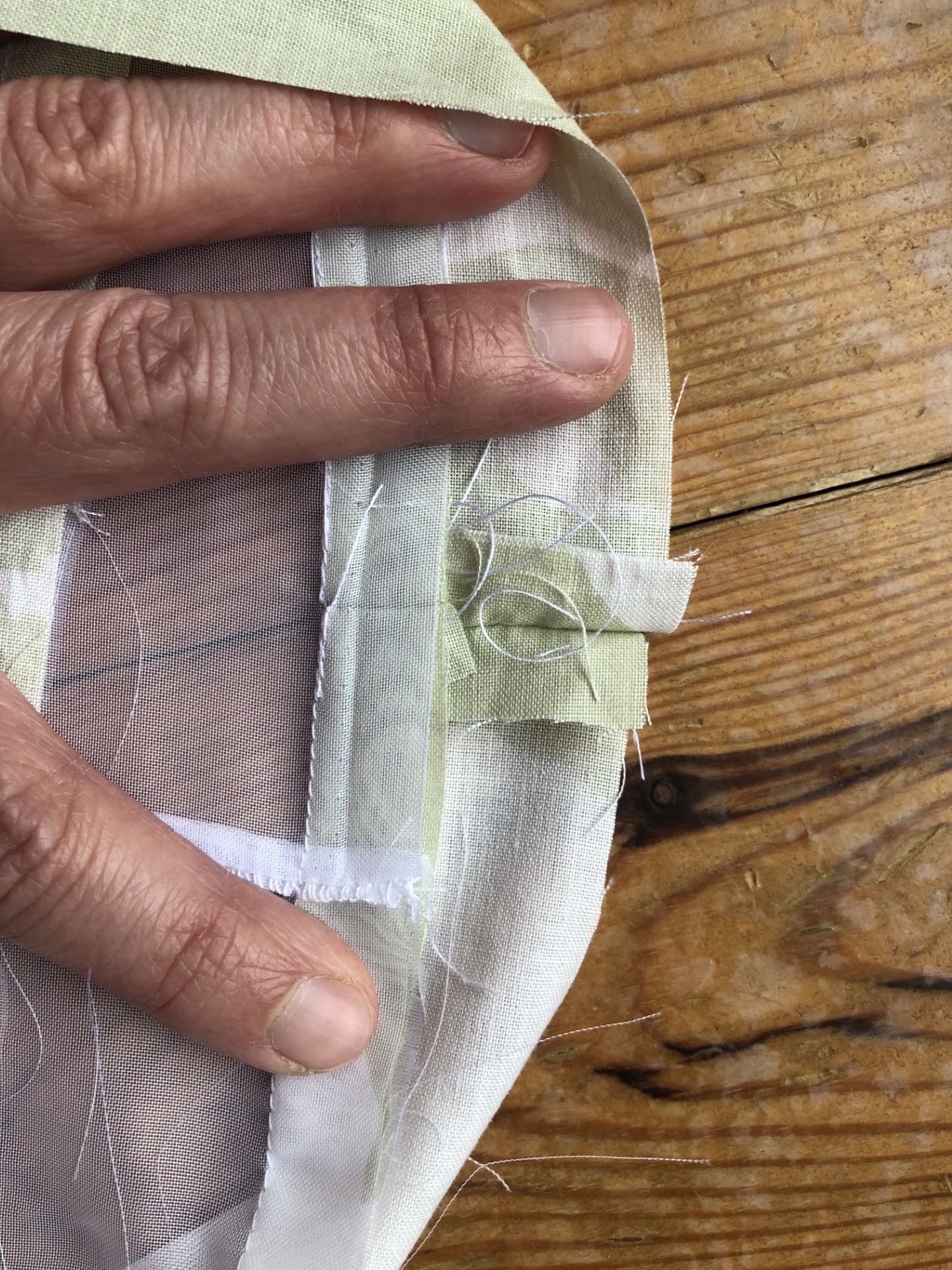
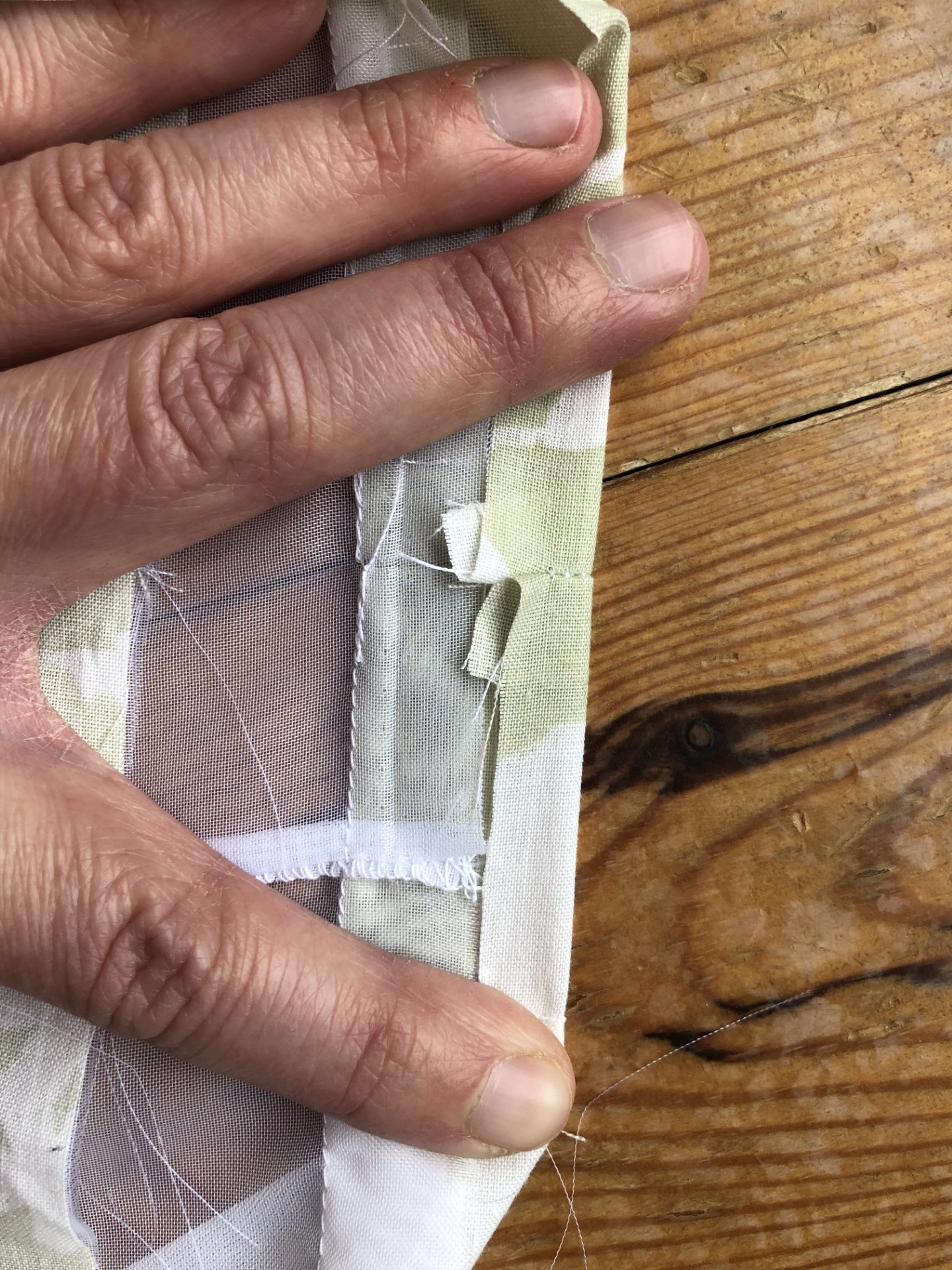
I reached a point where reusing those scrappy single-use plastic bags just felt wrong. So I grabbed a voile curtain, chopped it up into chunks, serged the sides, turned the bags inside out and stitched over the seams for extra strength. I bound the top edges. No bias cutting, no pre-ironing the binding strips, no handles, no drawstring. Just simple bags.

Of course, I just blazed ahead and made eight in one go without pausing to test whether they’d freak out the machines.

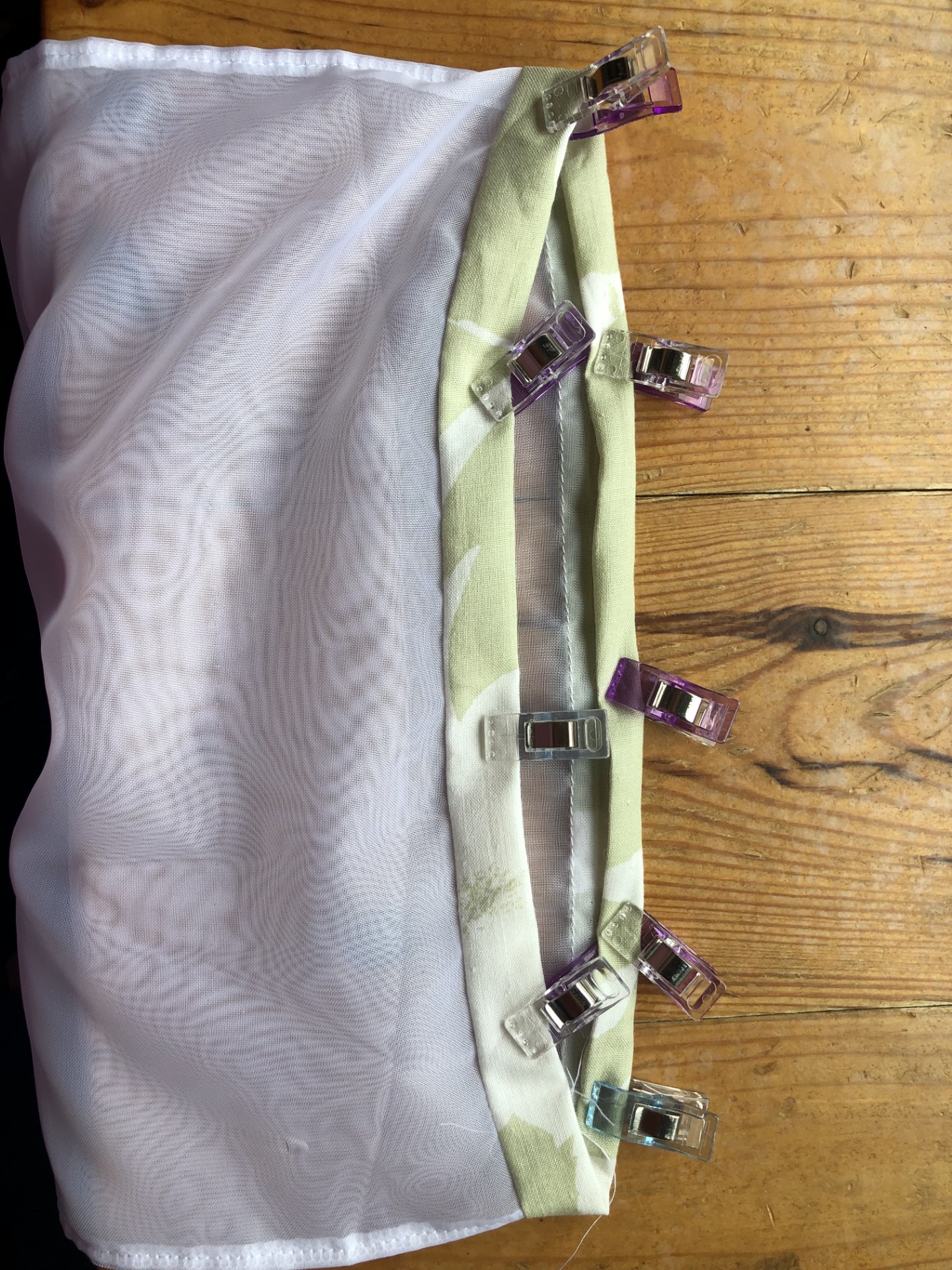
Each bag is roughly 33cm deep and 25cm across (about 50cm around). I avoided adding anything extra that might attract the camera’s attention and used a leftover piece of pale green sheet for the binding—low contrast and hopefully less suspicious.

Did they work?

No, they bloody well didn’t. And it had all been going so well—right up until the last hurdle.

  • I proudly (though hesitantly) chose to test them with red peppers. I figured if anything stood a chance of being recognised through the fabric, it would be a big, bold red pepper.
  • The bags are roomy enough that, as long as you don’t stuff them to the brim, the lack of a drawstring or handles isn’t an issue.
  • The checkout did recognise the red and even suggested the correct options—promising!
  • I tapped the screen, watched as the “weighing” and “move item to bagging area” prompts appeared…
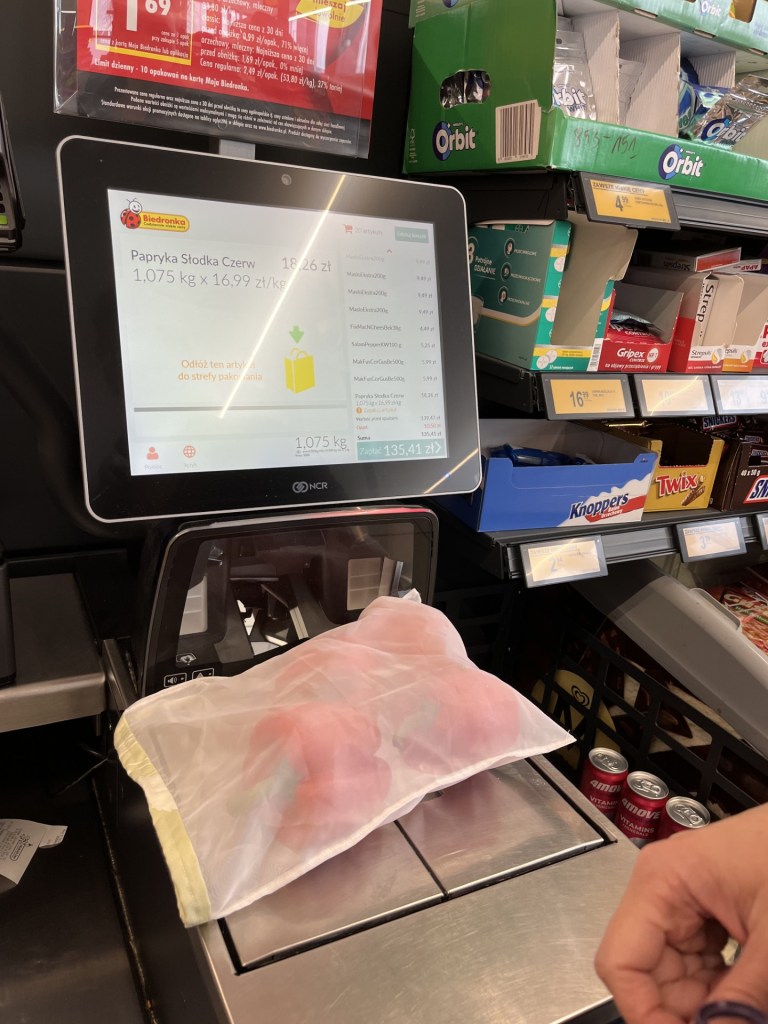
  • I moved the bag over and—bam! A blurry image popped up with the dreaded message: “unexpected item in the bagging area.”
  • Luckily, an employee was right there and cheerfully said, “I’ll rescue you!” (in Polish). And you know what? She actually did rescue the situation. That short, friendly exchange meant I left with a smile rather than a meltdown.

The moral of the story?

Don’t make eight bags before you’ve tested one.
Maybe try shopping somewhere that isn’t set up to push single-use plastic at every turn.
And maybe, just maybe, not everyone working in Biedronka has lost the will to live.

If you still want to make a similar bag—maybe using a different fabric if your checkout has eyes—here you go.

Basic Produce Bags – Sewing Steps

Here’s how I made mine. They’re intentionally simple and fast. You can adjust the size or finish details to suit your own setup.

  1. Cut your fabric.
    Either divide your fabric equally with no waste, or cut strips roughly 66cm x 25cm if you like the size of mine.
  2. Fold each strip in half lengthwise, right sides together.
  3. Sew the side seams.
    Use a serger or a zigzag stitch to secure both long edges.
  4. Turn the bag right side out.
  5. Reinforce the seams.
    Sew down each side again, stitching through both layers of fabric and the seam allowance. This adds strength and stops the seam from pulling apart under weight.
  6. Prepare the binding.
    Cut strips at least 5cm (2 inches) wide. These don’t have to be bias strips since it’s a straight edge.
  7. Attach the binding.
    • With right sides together, line up the binding along the top edge of the bag.
    • Don’t start exactly on a side seam AND start sewing about 1–2cm from the edge of the binding strip.
    • Sew all the way around using a 1.5cm (5/8 inch) seam allowance. I didn’t mind that this made the inside edge narrower than the outside.
  8. Join the binding ends.
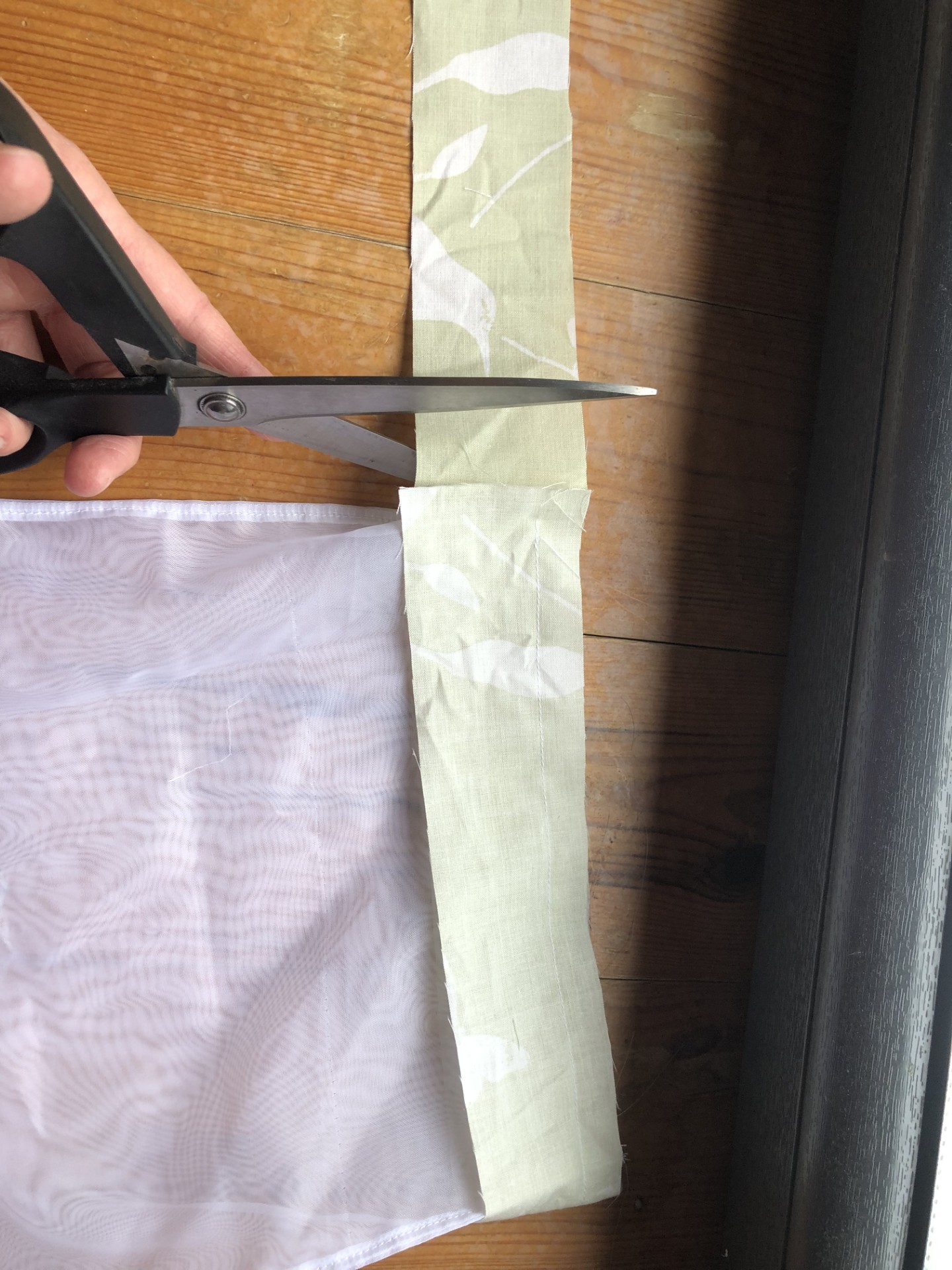
    Trim the strip so you have about 1cm extra on each end. Sew the two ends together without catching the bag in the seam.
  9. Enclose the raw edges.
    • Open the seam where you joined the binding ends so it lies flat.
    • Fold the binding upwards so it extends beyond the top of the bag.
    • Then fold the outer edge of the binding down so its raw edge meets the raw edge of the bag.
    • Fold the whole thing down again so everything is enclosed.
  10. Topstitch the binding.
    With the inside of the bag facing up (so you can see what you’re doing), topstitch along the edge of the binding.

That’s it! I may now quietly mourn the fact that I didn’t use that black floral print binding—or add handles.

First there were tadpoles, then there were knot

Why an alternate collective noun should be a philosophy of tadpoles

A short personal essay about good intentions, unintended consequences and looking for meaning.

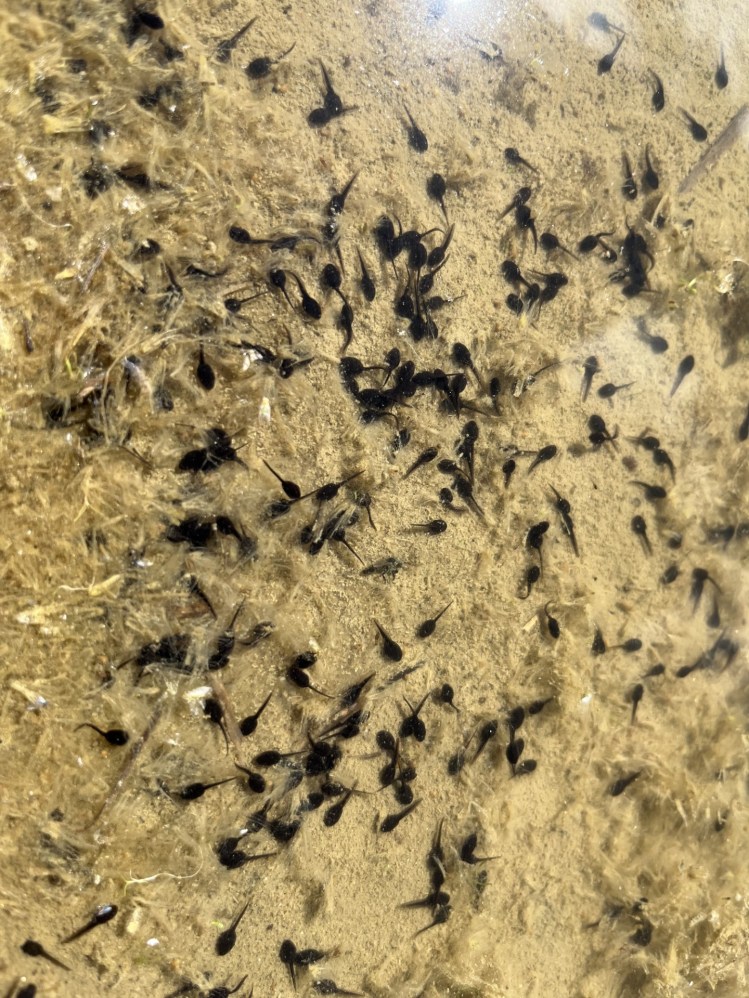
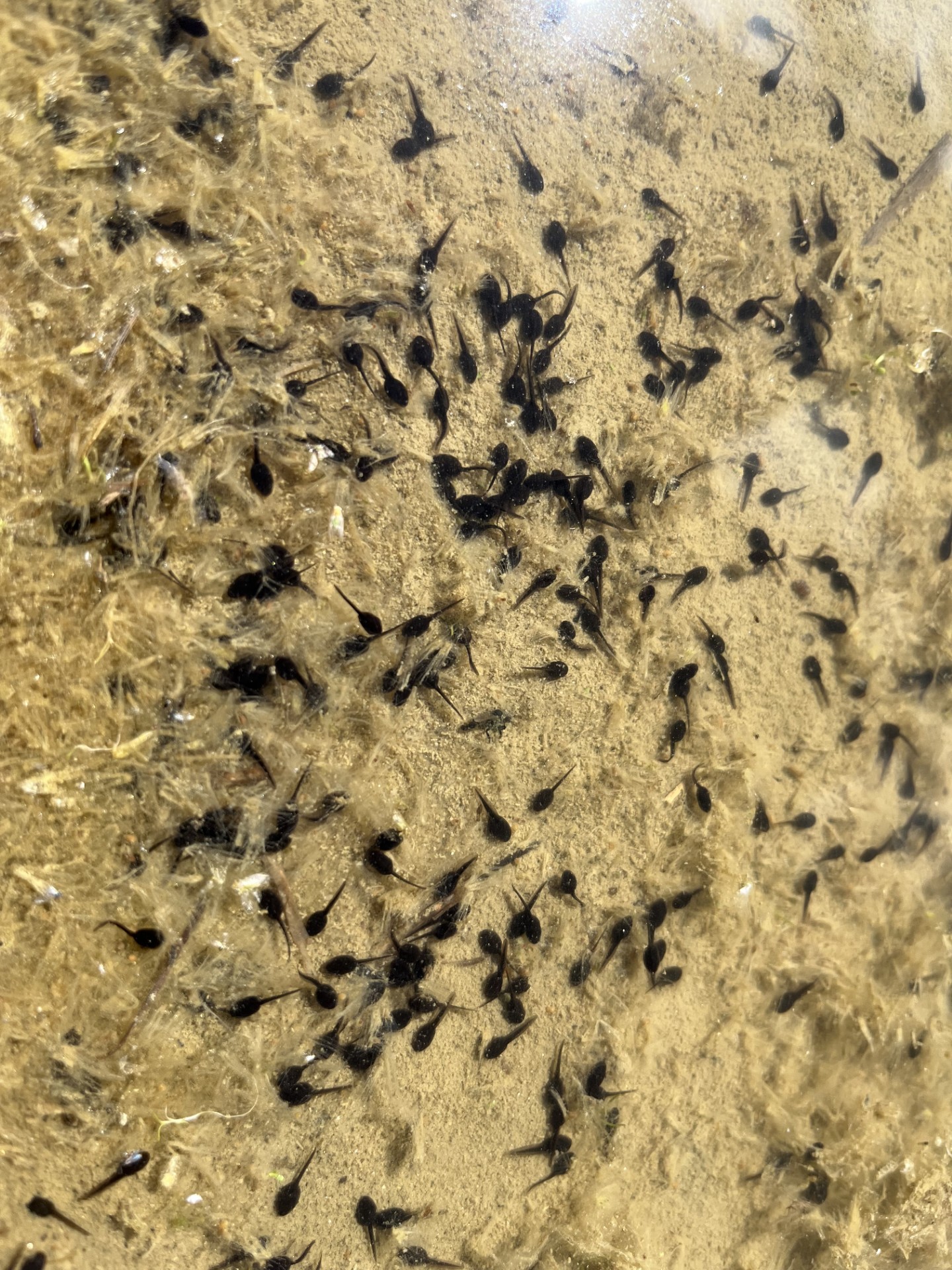
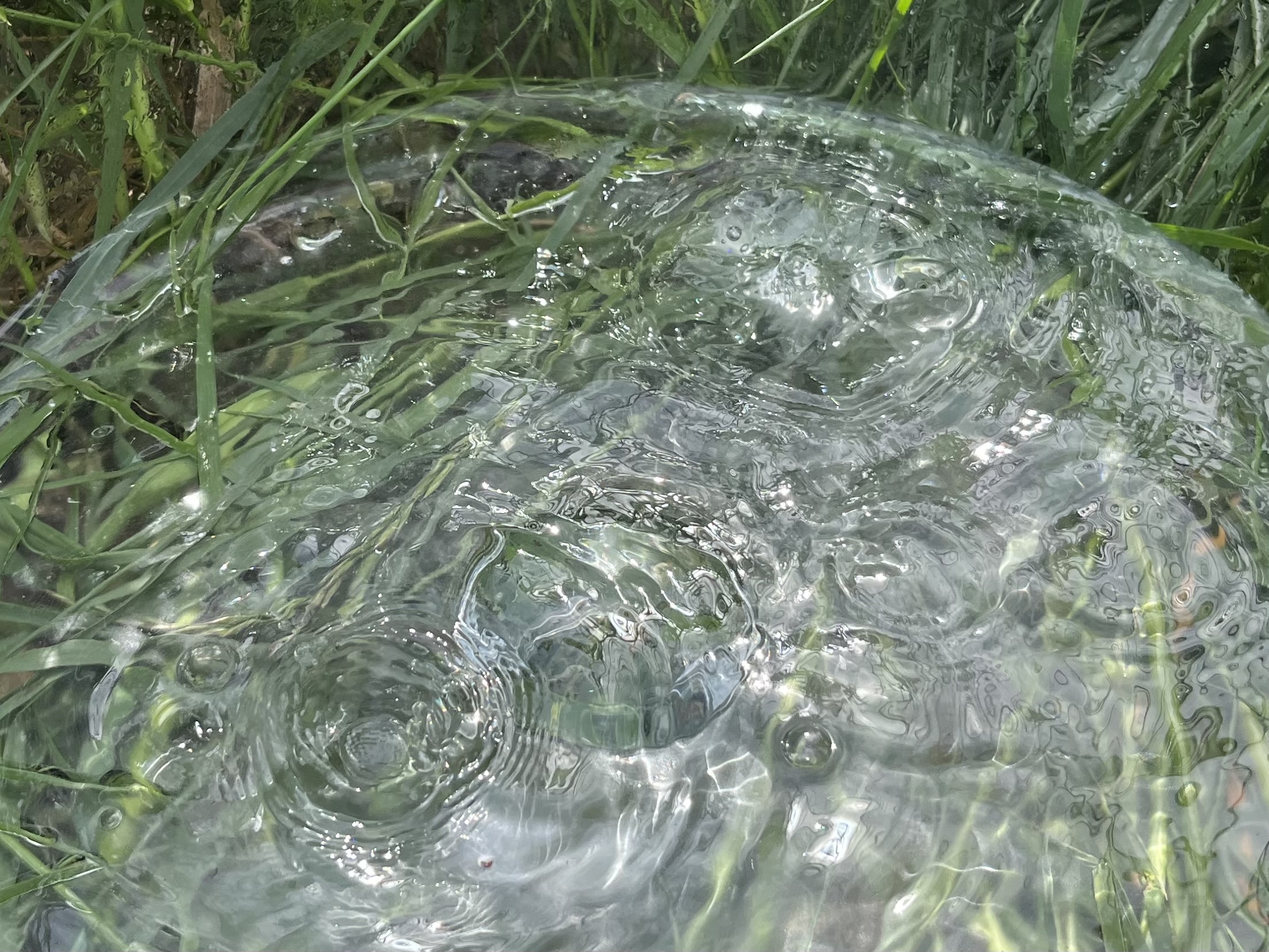
It happens every year. The perpetual(ish) puddle that my kids slide across on their bellies in winter and throw stones in during spring and autumn dries up in the summer. But not before some stubborn frogs lay a bunch of frogspawn in it. Many species return to the same place they spawned year after year, and apparently, common frogs can live upwards of seven years. Maybe they didn’t get the note about climate change and drier summers—still preferring to risk laying eggs in their familiar spots: ponds.

Now, I use the term pond loosely. What we’re really talking about is a divot in the ground on the edge of a quarry that routinely fills—or floods—with water. While I wouldn’t recommend messing around in active quarries, I’ve lived next door to this one for eight years. I walk around the edge with the dogs every day, so I’ve got a good sense of the land’s stability. Honestly, I’m not even sure how the place stays in business. Once every couple of months they seem to fire up the machines, but that’s about it.

We’ve collected tadpoles several times—feeding them dandelion leaves blanched in boiling water and dropped onto the surface of the tank. Once we have little froglets, we release them.

This year, we’re only just out of April showers and the pond is tiny. In my mind, this usually happens much later. While the water is often low and we often “rescue” tadpoles, I don’t think I’ve ever looked at it and thought, Hey, these guys are all doomed.

So I rallied/pestered/marshalled the kids into their wellies and we set off—two of us full of cold—with a large bucket and a scoop to rescue as many little wrigglers as we could.

It did not go according to plan.

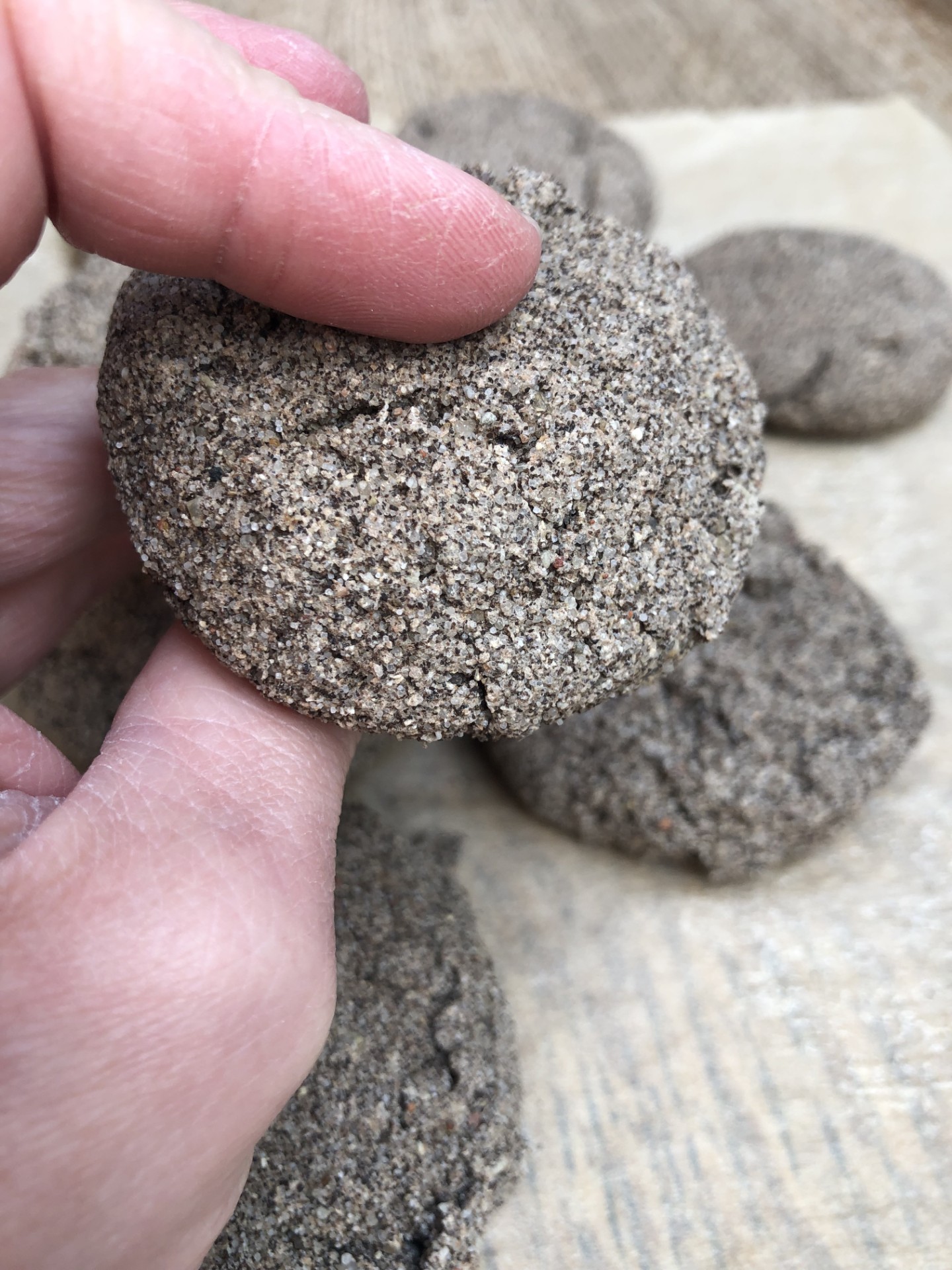
The fine sandy soil around the edge of the puddle was like quicksand, spilling over our boots and working its way through any cracks. My son got stuck once by accident—and I mean really stuck. We had to use sticks to dig him out and rock the wellies back and forth. Then he got stuck twice more on purpose.

The water was so shallow that I had to scoop at a very shallow angle. If I moved too fast, I just got mud; too slow, and they wriggled away. The ripples from scooping also washed many up onto the mud, where they got stuck. I had to painstakingly pick them up or gently flick them back in.

The more I scooped and rescued, the lower the water level dropped. Then we had to carry—what I now realised was an excessively large 25L bucket—about 400 to 500 metres to the bottom of the quarry, where there’s a year-round pond. (Again, safety note: I know this quarry very well. I use the machine road and only did this when the quarry was closed.)

To replace the water we’d scooped out with the tadpoles, we carried a half-full bucket back up out of the quarry to refill the puddle.

We repeated the process again. But the more I tripped and fell at the edge of the puddle while rescuing tadpoles, the more the soggy quicksand ground shifted, distorting the puddle and stranding even more.

After the second load of tadpoles had been released—and we were covered toes to knees, fingers to elbows, and splattered everywhere in between—it was time to call it a day.

I felt bad walking away. But saving them all seemed impossible, because everything I did had unintended consequences. I tried to hold on to the image of all the tiny tadpoles swimming in the shallows of the pond at the bottom of the quarry, rather than those stranded on the mud, struggling to make it back into the water. We replenished the puddle one last time, hoping to give the others a bit more of a fighting chance. Then, with dripping noses and achy arms, we headed home.

The whole thing wouldn’t stop churning around in my head. It was like I had to make meaning out of it—learn a lesson, come to a conclusion. What an odd, overwhelming compulsion it is to assign meaning to an event.

Perhaps in caveman times or ancient Egypt, if I’d been contemplating this, I would have drawn a cave painting of wise tadpoles sent from above to teach me a lesson? Honestly, probably not. I’d be thinking about food. But throughout history, symbology and religion have assigned higher meaning to stories and events.

Now, I do believe in a God—but I also believe he’s a hands-off kind of guy. The nonsense we get up to is a result of our free will. If he kept stepping in, it would mean influencing people—and then free will wouldn’t exist. And what kind of test of character would that be? (Maybe he sends signs, but it’s still up to us to follow them.)

So as I pondered whether there was a deeper meaning, I also resisted the idea.

The next day, I missed my morning walk but went in the evening. The puddle was gone—completely churned up and destroyed by some of the quarry machinery during their bi-monthly parade.

Lesson?

There is no lesson. Just do good things—even if they’re hard—before the opportunity is gone.

Moomins and compromises: A Nova coat tale

Why did I sew the Nova coat?

I love layers, and while fitted clothes suit me better most of the time, I needed something looser as a top layer — roomy enough to go over a vest top, jumper and whatever else I’ve thrown on that day. Most sewists will recognise the Nova coat by Papercut patterns (originally released as the Sapporo) and its cocoon shape and design lines called to me.

I’d had the pattern printed, taped, and traced for… months? Possibly a year. I was just waiting for the right fabric to inspire me to actually sew it. Until then, it sat there patiently.

General Nova coat notes

My measurements:

  • Bust: 98 cm
  • Waist: 82 cm
  • Hips: 108 cm

Size cut:
Although my measurements average out to a size 5, I cut a size 3 based on pattern reviews — and I’m glad I did. It’s still roomy enough to layer underneath without overwhelming my frame.

Pattern tip:
The back is made of three pieces:

  • Centre back
  • Two upper side backs (“shoulders”)

With a ‘feature fabric’, it’s very easy to overlap the pattern pieces and cut the back as a single piece. For a solid fabric, I always keep the pieced back – the design lines are just too lovely to skip.

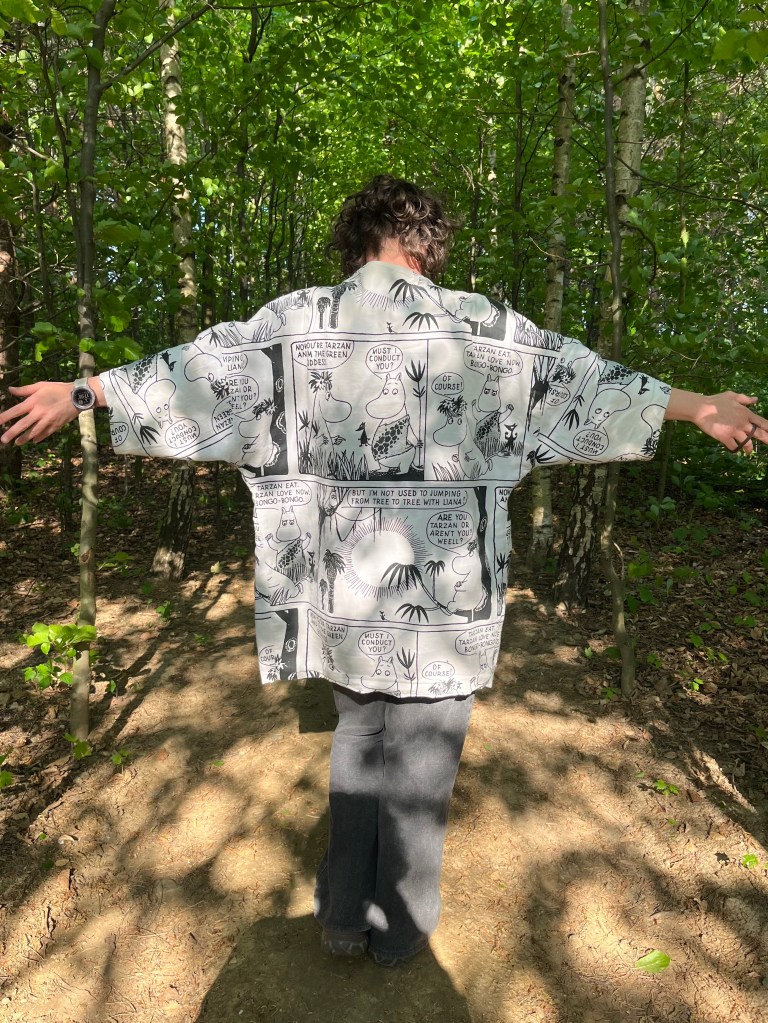
Nova 1: The Moomin fabric quest

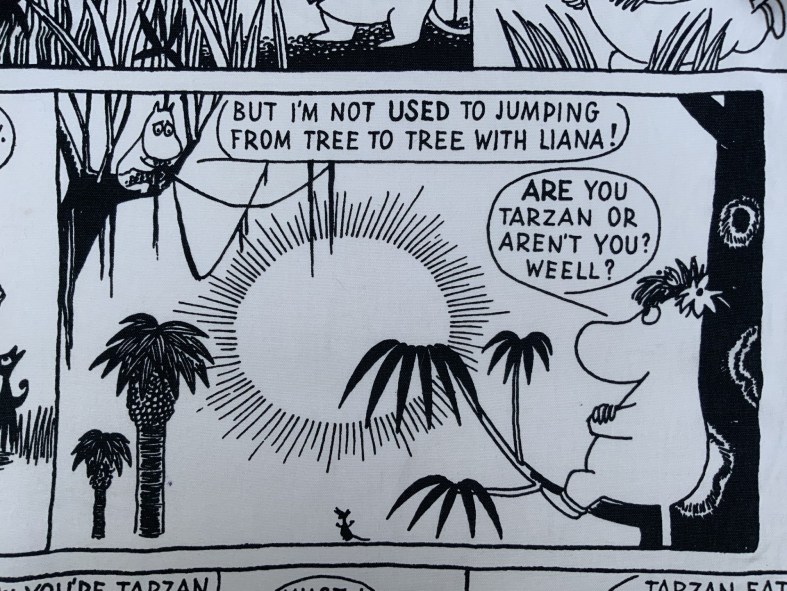
On one of my foraging trips to the second-hand shop, I spotted a single solitary Moomin comic strip curtain. Immediately, I thought: Nova coat. But then, budget panic and general second-guessing kicked in: Was it enough fabric? Was I being impractical?

I walked away. But that curtain haunted me.

A few days later, I cracked and asked my husband to grab it if it was still there. Apparently, he marched into the shop and declared (in Polish), “I’m here for the Moomin curtain for my wife.” The woman behind the counter knew exactly what he meant.

He came home, windows down, honking the horn, with the curtain draped around his neck like a vintage racing scarf.

And thus, the first Nova was born.

Sewing the Moomin coat

  • The curtain was big enough for the long coat version (phew).
  • To show off the large-scale print, I combined the back and shoulder pieces into one.
  • The sleeves are one piece, so the comic runs upside-down on the back — but since I’m not holding my arms out like a scarecrow all day, no big deal.
  • I lined it with assorted black and white fleece, left over from other projects. This made the lining a bit thicker than the outer — but it still hangs well.
  • The curtain had a loose weave, so I added (perhaps overly dramatic) triple topstitching at stress points.

I wear this coat constantly, and my husband now rolls his eyes and mutters, “Here comes Moomin Mama”. I’ll take that as a compliment, thank you.

Nova 2: The undercover poncho project

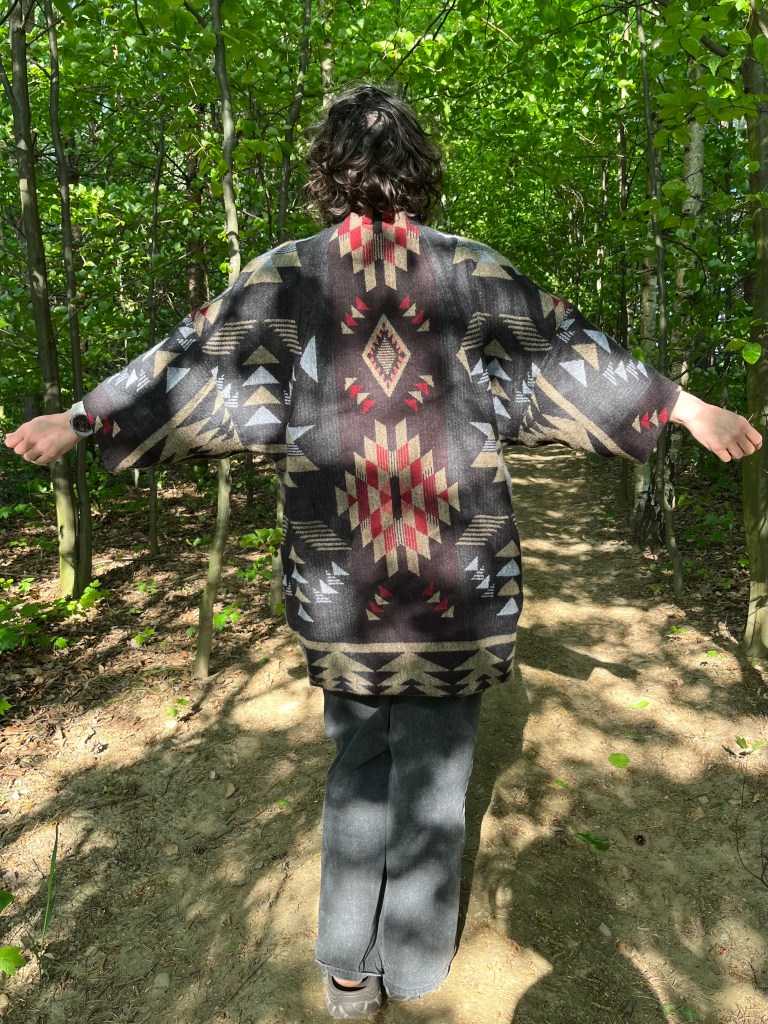
My daughter had two oversized second-hand ponchos that she wore on chilly days. But carrying a bag in them was awkward, and one had a neck clasp that nearly strangled her.

With all the subtlety of a mother on a mission, I decided to use them to make her a house coat. She was uncertain. I forged ahead anyway.

Luckily — she loves it. Just like I live in my Moomin coat, she now lives in her Nova.

Sewing the poncho coat

This one came with challenges:

  • Both ponchos had very loose weaves and frayed easily.
  • The seam allowance is only 1 cm, which isn’t much room for fancy finishes.
  • Midway through construction, I panicked that it would all unravel.

My solution? I cut strips of fabric from an old sheet and used them like twill tape to reinforce every seam where the two ponchos met. It added sewing time, but strengthened the seams and helped manage the fray.

No visual proof these strips do the job (all seams are hidden), but the coat is still intact — so I’m counting that as a win.

Nova 3: The compromise coat

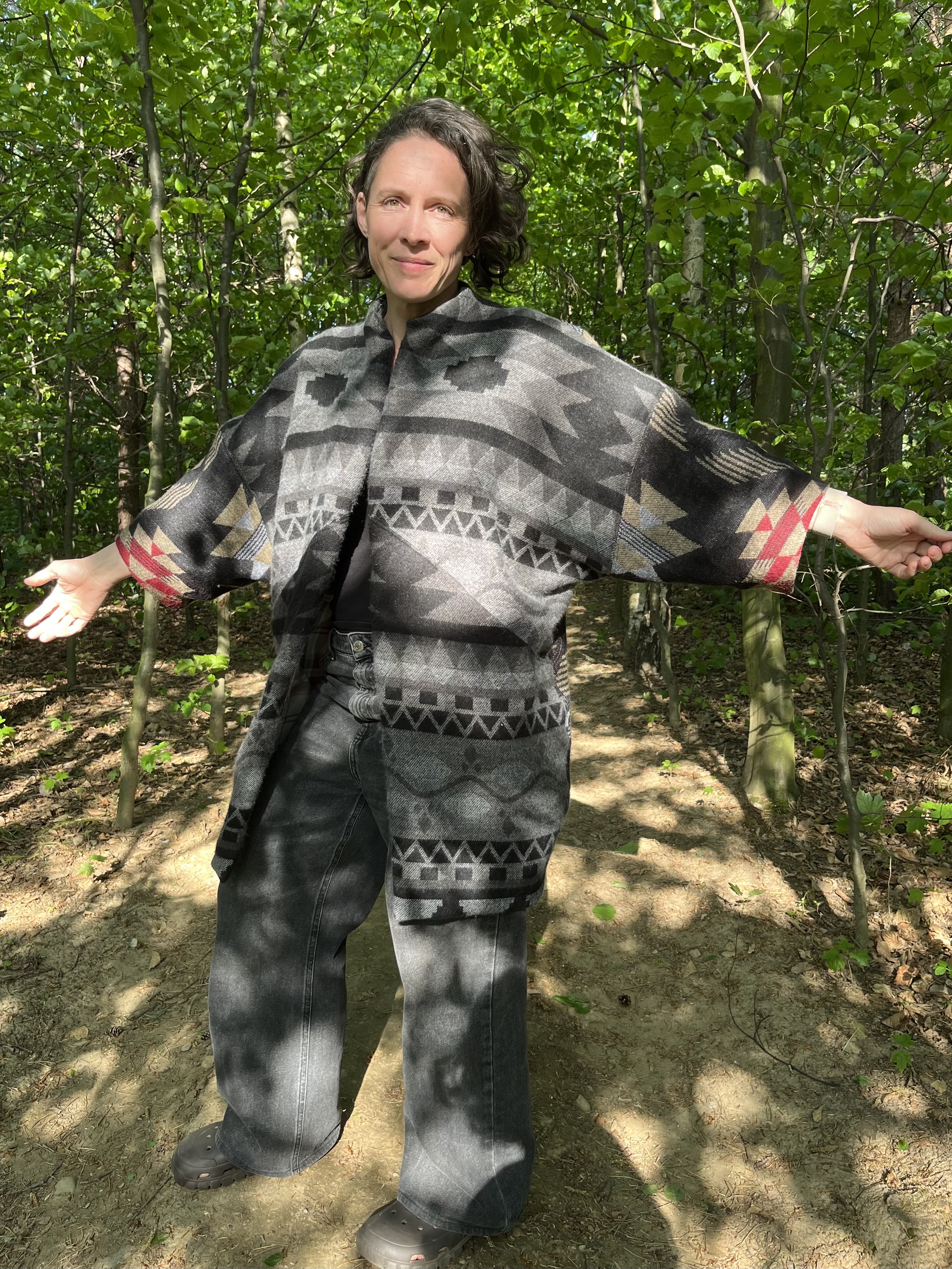
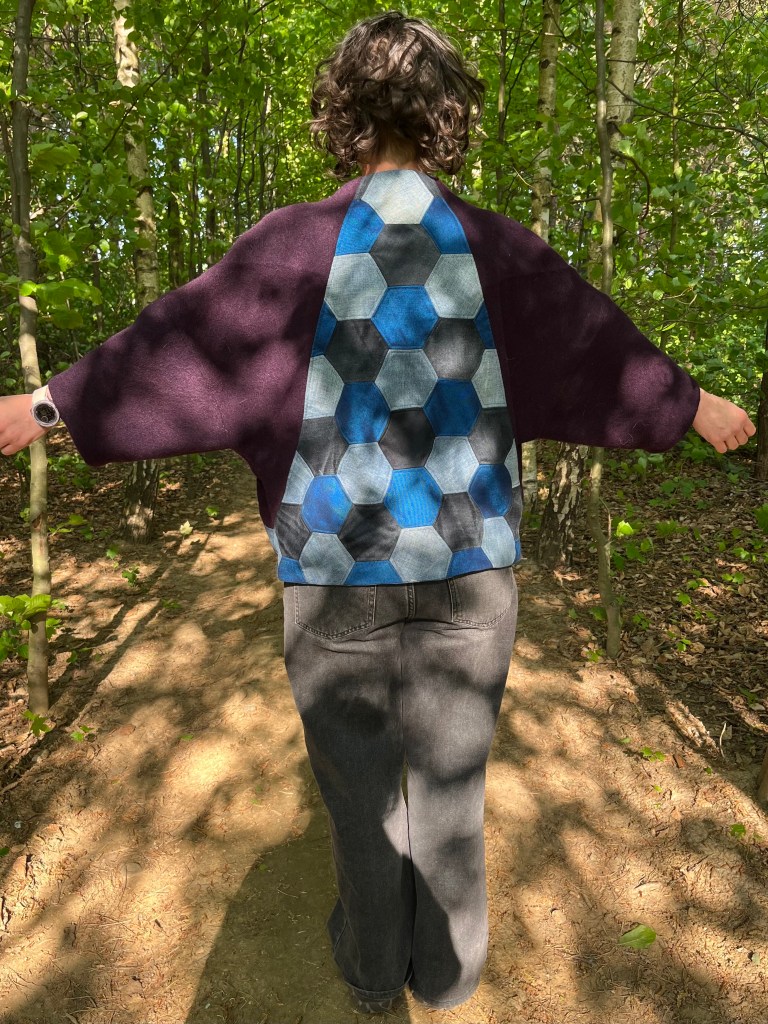
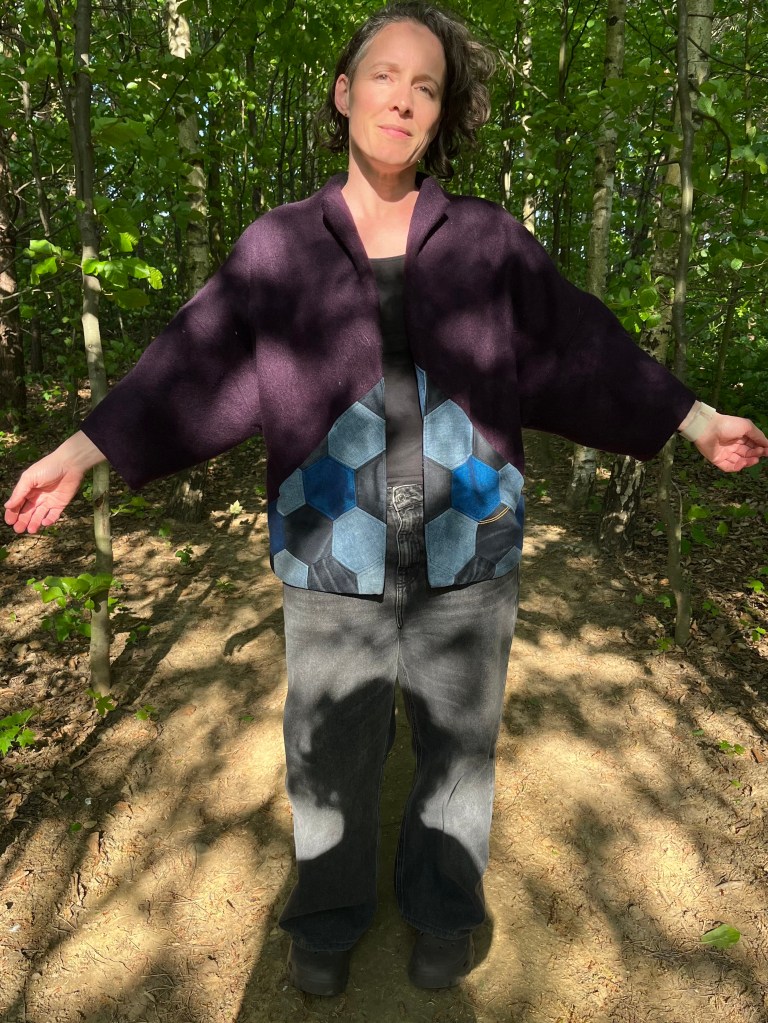
My mum gifted me a piece of dark purple coat-weight fabric — but there wasn’t enough for even the short version. I considered pairing it with minty blue-green wool for a “choc-chip” look, but a pile of old jeans in the corner caught my eye and imagination.

Enter: hexagons.

I patchworked enough denim hexagons to use on the bottom front and back of the coat, so the patchwork sections meet and visually wrap around the sides. I love the way the patchwork sections look… but this coat turned into a series of sewing compromises.

Sewing the compromise coat

  • Short coat version — it’s all I had fabric for.
  • Skipped patchworking the drafted-on pocket bag. Instead, I just sewed a chunk of denim just inside where the folded edge sits.
  • Didn’t want to fold patchwork edges, so I made custom facings for the:
    • Centre front
    • Bottom front and back edges
      Worked well — except the lower front corners, which needed some hammering to lie flat.
  • Patchwork back was too short in places because I ran out of matching denim — I was missing about 1 cm, but I went for it anyway.
  • No backing layer on the hexagons. I was already concerned about the denim weighing down and stretching the purple fabric.
  • Used a slippery lining fabric but had previously cut into it, so both inside fronts have a mystery seam halfway down.
  • The neck facing is black fleece — because the purple fabric is gorgeous but itchy, and I know myself.
  • Finally, that slightly-too-short outer back? Yeah, it messed with the lining too. It now bags slightly past the hem.
    • I tried edge stitching the hem but it just created a hard ridge, so I unpicked it. I’ll tack the lining in place eventually.

Final thoughts

The Nova coat is a fantastic pattern — striking but wearable, and endlessly adaptable.

  • The Moomin coat is my winter uniform.
  • The poncho coat gets daily wear from my daughter.
  • The compromise coat… we’re still working on our relationship. I finished it right as spring arrived, so we haven’t had time to bond. But come colder weather, I’ll take it out for a walk around town and see if we can find common ground.

Quantum entanglement and cornflakes: Part 3

Of all the replies he’d imagined finding the next morning, none came close to the hurried scrawl that filled the front of the cereal box.

“Business trip, September, mum dies too, house on fire, trapped, SAVE YOURSELF”

He sat down heavily, unsure whether to view this particular message as comical or concerning. He imagined what would’ve happened had he read the message mid-sip: a cartoonish arc of coffee spraying from his mouth and his eyes popping from his head.

He shook himself and raised an eyebrow—perhaps it was just ominous language and fake foresight, like a fortune teller’s predictions. The business trip part was vague enough to be accurate in a number of circumstances, but her mum dying too…and a fire. Those parts seemed unnecessarily and worryingly specific.

Unsettled and late, he scribbled on the box “? I need more details” and as an afterthought, “Are you ok?”. He shoved the empty cornflake box back into the centre of the table next to the almost full one and hurried out to work, dropping the recycling on the curb as he went.

All day he sat with a notebook at his elbow projecting possible timelines “Grace died two weeks ago”, “business trip, September”, “lived here for 25 months”, “house on fire”. Despite the apparent simplicity of the task, he went over it again and again, until he was satisfied he had pinned down a danger window; the last two weeks of September and the first two weeks of October.

He left work early with a plan forming in his mind, all he needed was a few more details.

There was only one cereal box on the kitchen table when he got home. Frantically, he searched the bin, the recycling and the cupboards, nothing. He started texting Grace and Helena then stopped himself. It was over, the box was gone.

And yet it wasn’t over. Remembering the fire, he examined the table for ashes. He was slightly disappointed and relieved to find none, but then the spycam caught his eye.

He popped the SD card into his computer and played the last 24 hours of film at high speed, nothing. Helena normally dropped by to clean at around 10 am, it wasn’t her normal day but… he slowed the speed. As he watched, he realised the time stamps were jumping forward. Checking the settings, he realised that rather than motion-activated or continuous, he’d selected battery saving mode. Instead of video he had photos taken at 10-second intervals. Was 10 seconds enough for someone to run into the kitchen and leave a note or move a box without being seen?    

That night, he took his laptop to bed and fell asleep with tabs filled with searches for digital nomad jobs, rental villas, October holidays, and common causes of house fires, all crammed into his browser like sprinkles on a doughnut.

The next day he felt energised. He told Grace all about his plan for them to get away together in the autumn, for a whole month—to really reconnect with each other. He left off the part about it all being the result of cereal-box-induced fear of death.

In the coming months, he busied himself getting rid of candles, installing smoke alarms, sweeping the chimney, booking accommodation and flights and finding a fully remote job.

It was all organised, they would both be out of the country for the entire ‘risk period’. And if Grace never went on the business trip, her mum would also be safe. He did, however, arrange a long weekend with Grace’s parents before they left.

The day before the flight, Grace’s phone rang. He’d never seen her turn as white as when she took that call. Her mum had been rushed into intensive care following a stroke and wasn’t expected to survive the night.

There was still a choice, but it was a terrible one. Grace was unlikely to go on a business trip now, and if her mother died, maybe the cereal box was wrong. But he would still be in his house. Grace was in no state to drive, and so he climbed behind the wheel, deferring the decision to the morning.

A tense night turned into a week, then two weeks. Without ever making a conscious decision, they spent almost the entire risk period nursing her mother and helping her father around the house. As October rolled around, it seemed Grace was out of danger, though her mother was now battling pneumonia.  

On a grocery run for crunchy nut cornflakes of all things—he had a stockpile in the pantry at home—he got the call. “We lost her” was all Grace could manage to say. He hated that phrase.

In the coming days, he moved home to make space for grieving relatives. He was almost out of the woods, but given the circumstances, the whole thing now seemed absurd and delusional.

The day before the funeral, his phone lit up—Grace. In what he hoped was a sympathetic and reassuring voice he asked “How are you holding up?” there was a pause, then he heard her father’s voice, cracking and choking “I can’t believe I need to tell you this but we’ve lost her too” he went on to mumble something about the funeral still needing to go ahead and hung up. What else was there to say? The outcome hadn’t changed, just the specifics. In that moment, he made his peace and spent the evening drowning his sorrows.

Grace was inconsolable. Her mother’s death, the misplaced ashes, their eventual discovery—then this. For a long time, she couldn’t forgive herself for not calling him that night, but she’d been too upset to speak. She knew Mark had liked her mother. But to drink himself into a stupor—and remove the batteries from the smoke alarm? Some things were inexplicable. It seemed the fire had been started by an electrical fault in an old plug socket hidden at the back of the storage pantry where he kept his cereal.

The end

Quantum entanglement and cornflakes: Part 2

He hadn’t even meant to go into the kitchen—it was just habit. There was a little bakery down the road, and he’d planned to surprise Grace with fresh coffee and doughnuts. But as he was there, he grabbed a glass of water and, unable to resist, glanced at the crunchy nut cornflakes on the table. The same message, his message, was still on the box, but two things had been scribbled out and replaced.

“I’m Mark, this is my house I’ve lived here for 18 25 months, and Grace is fine dead.”

He snorted softly, so was this the punchline the cornflake conversation had been building up to? The whole situation had just hit ridiculous. Clearly, someone with a vivid imagination was pranking him for some reason. Maybe a streamer or blogger acting out an elaborate hoax: breaking into his house, planting a cereal box and then leaving messages…all while never setting off the alarm…?

Entirely possible. But he paused, mid-lace, as he noticed Grace’s shoes by the door. Of course, it was so simple, it was her, she just lied so as not to spoil the joke. Maybe it was a way to reopen the channels of communication between them. He snorted again, even more relieved. And—feeling pretty good about the fact she clearly wanted him back—he shouted over his shoulder: “Ha ha, no hard feelings, but don’t complain when I prank you. I’m off to grab doughnuts.” He bounced all the way to the bakery and back.

Already sipping his coffee, he found her in the kitchen, one foot tucked under her and the other resting on the chair’s edge, she was holding up the cereal box, turning it this way and that: “It’s not funny. I know it might seem harmless, but to me, it feels a bit threatening, it seems to imply I’m going to die. Have you reported it to the police? I mean, I’m assuming it’s not you, right? Otherwise, it wouldn’t have gotten under your skin.”

He stopped dead in his tracks. It was one of those moments when life seems to pause, even the next thought doesn’t come, and somewhere, a cinematographer is adding a Hitchcock zoom for dramatic effect.  

Aware he’d been standing motionless for a while, perhaps even with his mouth open, he recovered enough to say, in what he hoped sounded a casual voice: “Yeah, I was going to report it this week.”

The police station was, as it happened, close enough to his office that he had no excuse not to report it. During lunch, he reluctantly walked up to the front desk and, in smug self-congratulation and an attempt at self-preservation, announced, “My girlfriend wants me to report an incident.” He inwardly cringed as the policeman took details with more than one raised eyebrow. Fortunately, it was quiet enough that the man found it amusing, despite it being a waste of time. Cautioned to keep setting the alarm and assured he’d be contacted if any other unusual events were reported in the area, he left.  

It was a monumental waste of a lunch break, but at least Grace would be happy, and the entire precinct would have something to laugh at over coffee. Although police reports, incident numbers and Grace made the cornflakes feel like cornflakes again, all very tangible and solid—a real-world problem with a real-world solution—what if…?

On the way home from work he stopped at an electronics store and did what the crunchy nut cornflakes themselves had suggested: he bought a spycam. No point, it seemed, in setting them up all over the house, so after climbing on and off the kitchen cabinets for almost an hour trying to position the thing for the perfect view of the kitchen table, he stopped, satisfied his Mission Impossible antics would pay off.

Sitting down to a plate of spaghetti, he allowed himself to complete the thoughts that had up till now just been shadows of ideas. What if a future him was able to communicate via the cornflake box? If that was true, and Grace was going to die, could he prevent it? Was this a linear time situation where he would change something and the future would change? Was it a parallel universe of extensive similarities but subtle differences, one where it was already different in so many ways you couldn’t draw parallels between the two? What if their fate was predetermined and nothing he did would matter, Grace would die soon one way or another? And what if Grace dying was part of some plan and interfering would have terrible unintended consequences?

He tugged at a single strand of spaghetti and watched with curiosity as some moved—though not always the ones he expected—while others remained stubbornly in place. He’d read an article on quantum entanglement and, looking at the spaghetti, he thought perhaps that was the explanation for what was going on. Despite his pseudoscientific theories and the untold number of possibilities and outcomes and explanations, he knew one thing, he couldn’t do nothing. Just before bed, when he was sure Grace would not turn up unexpectedly, he wrote a new note on what was now an empty box of crunchy nut cornflakes: “Say I believe you ‘future me’, how do I save Grace?”

End of part 2

The Ogden Metamorphic mash-up

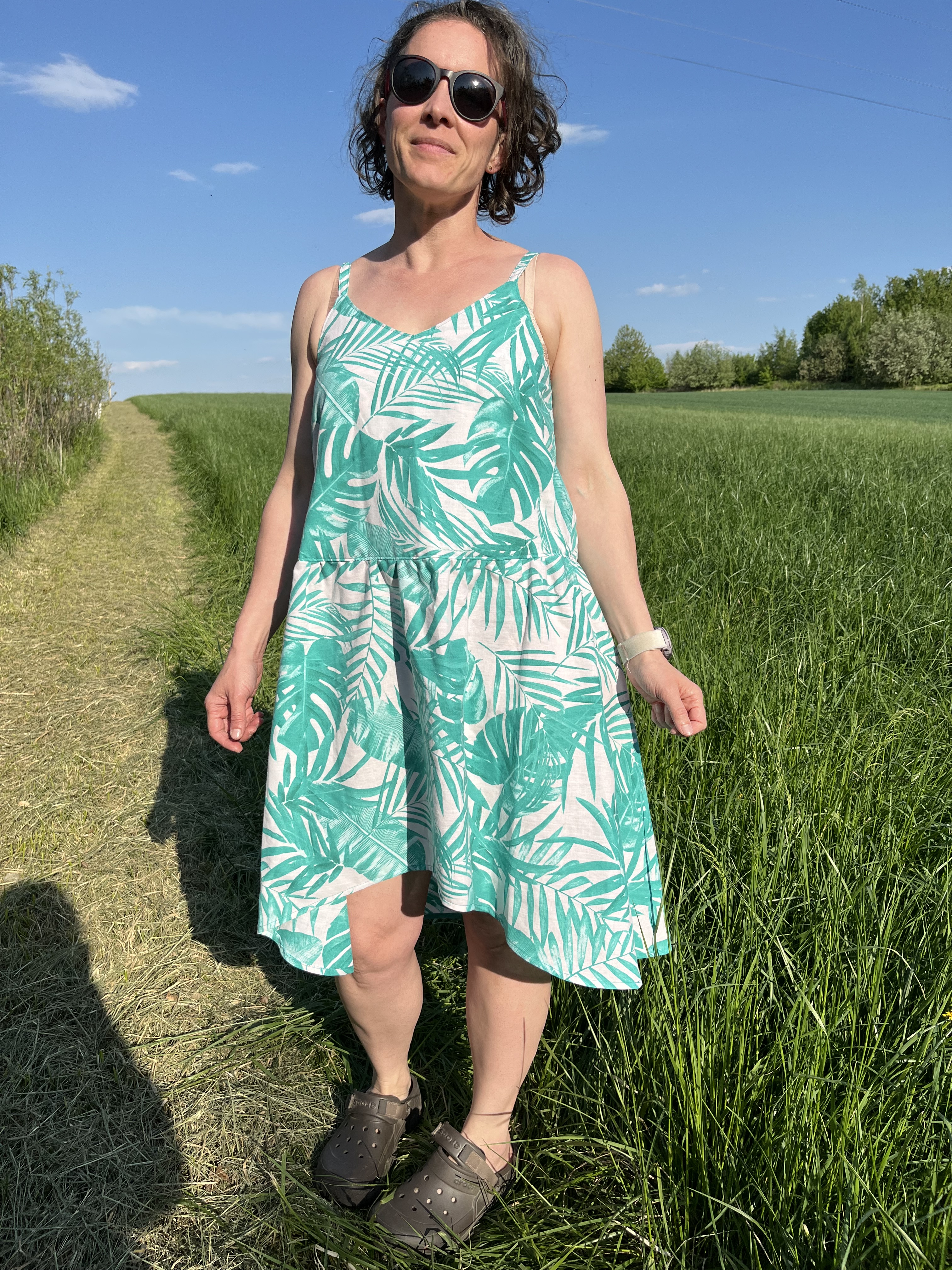
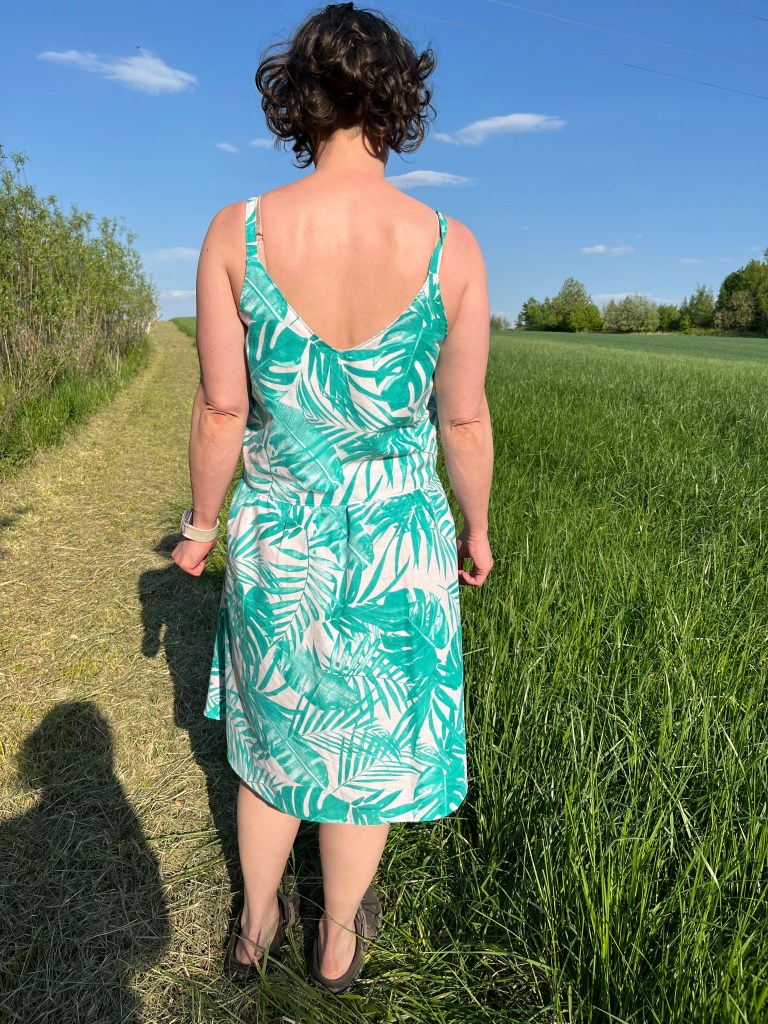
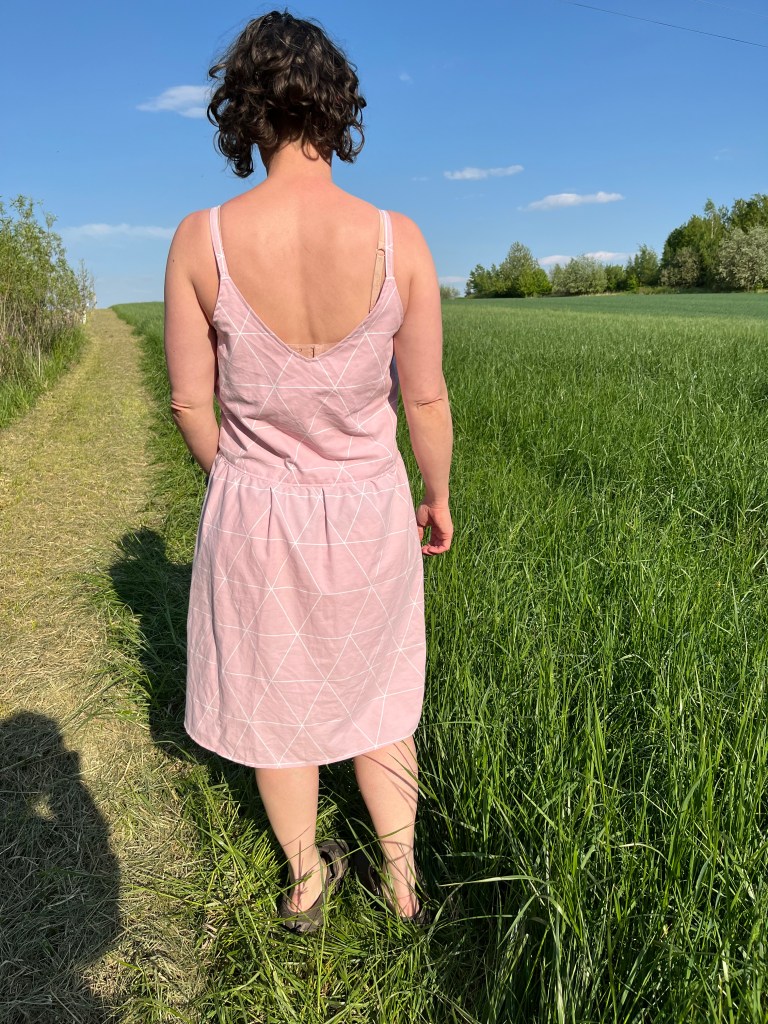
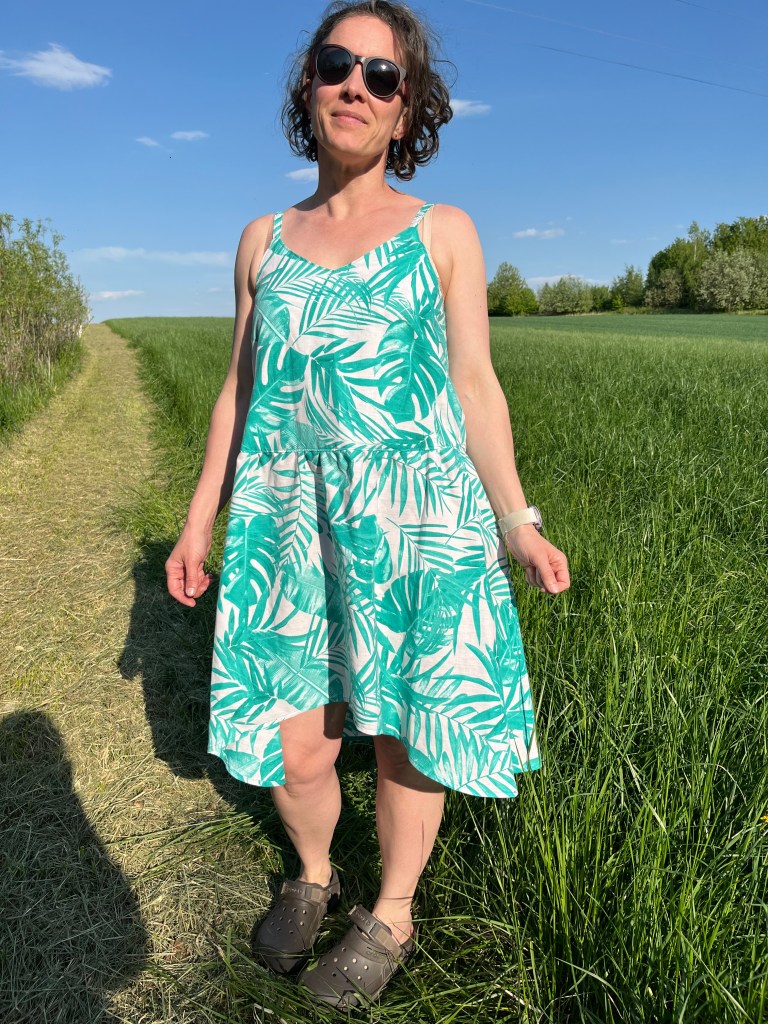
Photo of a tropical print house dress

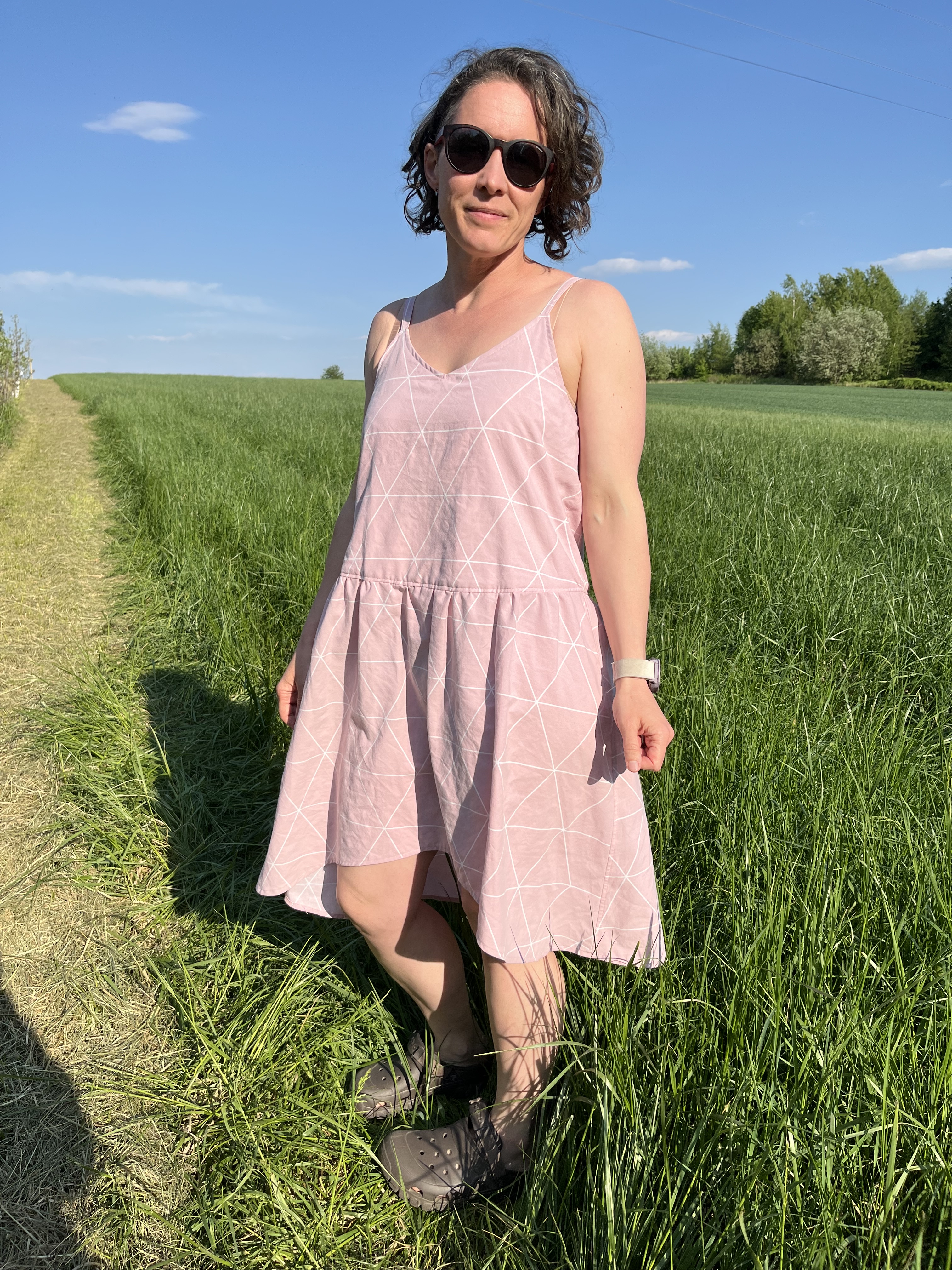
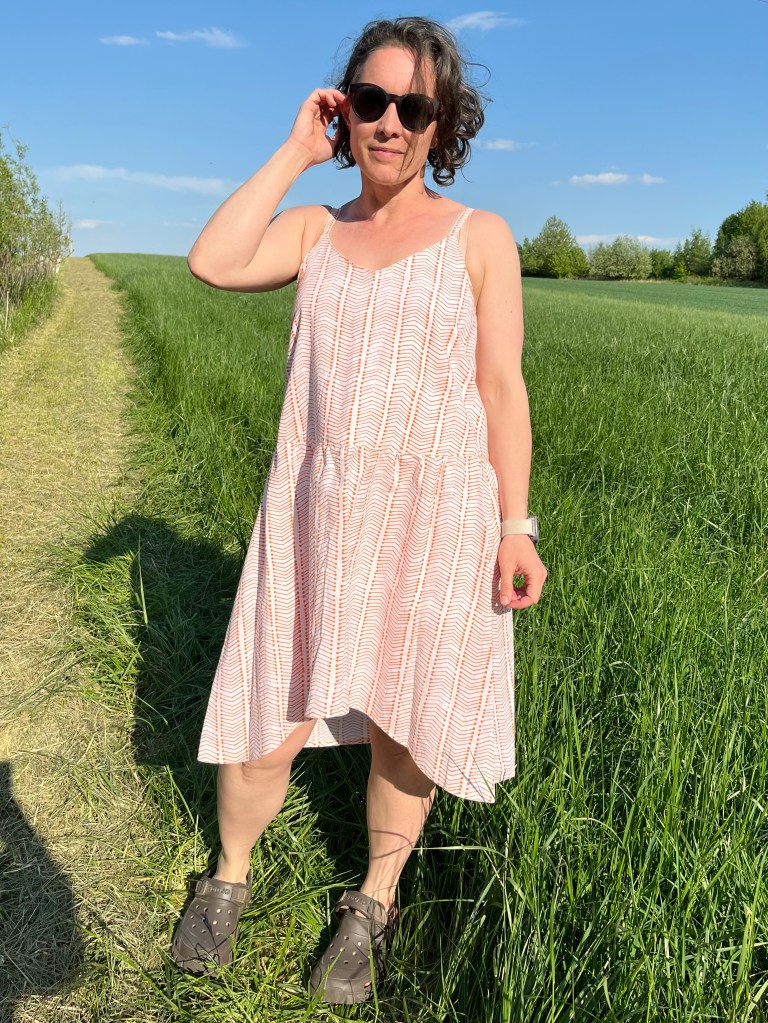
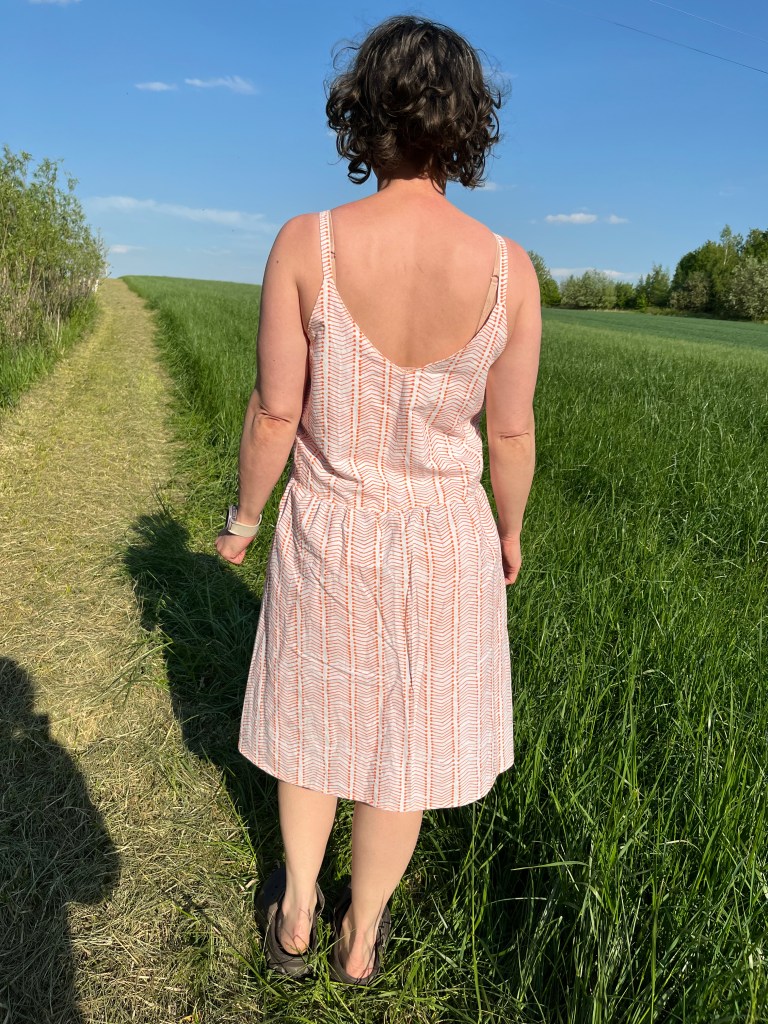
A trio of house dresses

The quest for the perfect “house dress” ends here (with second-hand duvet covers, of course).

For a long time, I’ve wanted something easy to wear and easy to wash for those days spent buzzing around the house and out on the property. Something cute enough to feel put together, comfy enough to handle chores, and quick to sew so I can make a few in different colours. Basically, the ultimate house dress.

But I can be a little hard to please when it comes to clothes.

My (extensive) house dress wishlist:

  • Made from woven fabric, preferably second-hand
  • V-neck or mid-to-low scoop neckline
  • Sleeveless — spaghetti or narrow straps ideal
  • Covers me when I bend over but sits above the knees (flattering, thanks!)
  • Lower waistline and loose, but not oversized — I want to be comfy, not swamped.

See, picky!

After far too much procrastinating (read: “research”), I gave up searching for the perfect pattern and started playing with the ones I already had. And somehow, miraculously, I hit the jackpot on the first try with a combo of the True Bias Ogden Cami and the Sew Liberated Metamorphic Dress.

Two days later, I had three comfy, swishy, house-friendly dresses made from old duvet covers — they beat a faded T-shirt and stretched-out leggings any day.

Patterns, sizing and alterations

My measurements:

  • Bust: 98 cm
  • Waist: 82 cm
  • Hips: 108 cm

Ogden Cami – True Bias

Size traced: 12
Modifications:

  • Adjusted side seams to drop straight down from the widest bust point (removed flare).
  • Shortened both front and back by 4″ — I removed the height from the middle of the pattern to keep the hem curve intact.
    • I’d made an Ogden before and knew that shortening by 4″ would place the hem right at my hip bone, where I wanted the waist seam to hit.
  • Cut two fronts and two backs to fully line the bodice.
    • A full lining gives a cleaner finish — plus, on very relaxed days, I can skip the bra.

Metamorphic Dress – Sew Liberated

Size traced: 16
(I wanted wiggle room — the extra gathers blend in nicely.)

Skirt construction:

  • I didn’t want the reversible/double-layer skirt, so I simplified:
    • Back of the skirt: One underskirt piece — covers my bum.
    • Front of the skirt: One overskirt piece — slightly shorter to show more leg.
    • Bonus: It helps differentiate the front from the back since Ogden can be a little ambiguous!

Sewing notes

Ogden Cami (Bodice)

  • Follow the usual instructions (seam allowance is ½”).
  • Only changes:
    • Attach a full lining instead of the partial one.
    • Skip hemming the bottom — the skirt gets attached here.

Metamorphic Skirt

  • Seam allowance is ⅝”, so I used rough flat-felled seams on the sides (I hate raw edges).
  • Hemming:
    • Sew a ¼” guideline, then double-fold and topstitch the hem.
    • I carefully pinned the curved front, but totally winged it on the back.

Joining bodice and skirt

  • Gather the skirt:
    • Single line of basting stitches across both front and back.
    • (Yes, two rows are better — but hey, house dress = relaxed standards.)
  • Attach the outer bodice:
    • Right sides together, sew the gathered skirt to the outer bodice with a ⅝” seam.
  • Prep the lining / inner bodice:
    • Sew a ⅝” guideline along the inner bodice edge.
  • Pin, pinch, and peek
    My personal, slightly fiddly, but satisfying technique:
    • With the dress inside out and flat, pin the inner bodice over the waist seam.
    • Flip to the right side of the dress, pins underneath.
    • Topstitch slowly:
      • Pull a pin → pinch the lining in place → peek underneath to check it’s sitting right → sew a few stitches.
    • Repeat. Slowly.

This method helps ensure the outer seam stays flat and neat — and avoids those irritating finishing mistakes I know I’d fixate on every time I wore the dress.

Conclusion

That’s it! I’m actually wearing the pink version as I type this. It’s already a firm favourite, but in need of a wash, so it’s time for the orange or tropical print dress to tag in.

Those of you with sharp eyes may have spotted one oversight… no pockets! I’m toying with the idea of adding patch pockets for my phone — but honestly, walking around without it might not be the worst thing.

Proof or proof enough? Part 1

Why science gets it wrong (and why that doesn’t mean it’s broken)

Science can be frustrating—progress is often slow, and research we trusted can turn out to be incomplete or even wrong. That makes it hard to make informed decisions about things like your health or treatment options.

If you’ve ever asked “How could the experts get it wrong?”, maybe this post will help explain how scientists are doing the best they can, and why the process—while flawed—isn’t failing.

Starting with nothing

Scientific experiments are usually designed around a null hypothesis. Yes, that already sounds boring—but it’s important. The null hypothesis is just a statement that there’s no effect or no relationship—that nothing interesting is going on.

Why start with the assumption that nothing exciting is happening? It’s not to suck the joy out of science—it’s to reduce accidental bias. Scientists love their work, and it’s easy to start seeing patterns or connections that aren’t really there. The null hypothesis is like a guardrail: it keeps conclusions grounded in evidence rather than enthusiasm.

Instead of looking for proof that something is happening, scientists gather evidence to reject the idea that nothing is. And even if they can’t gather enough evidence, that doesn’t mean the null hypothesis is true—it might just mean they didn’t measure the right thing, or didn’t measure it accurately enough.

Science is more like a courtroom drama—a “beyond reasonable doubt” situation. Why? Because it often takes a landslide of studies and repeated evidence to truly prove or disprove anything unequivocally. And even then, our understanding of the world is constantly evolving.

Why experiments can seem so weird

At first glance, some experiments seem downright weird or disconnected from reality. But it’s often because the real meaning—why the detail matters—is buried in previous research, deep in a dense academic paper, or tangled in layers of concepts that separate it from its practical use.

Let’s focus on biology, pharmacology, and physiology—fields where a lot of labwork or real-life studies, deal with complex, living systems—people, animals, and even plants.

Layers of complexity

Everything is made up of nested layers of complexity, like a Russian doll:

Bodies → Organs → Tissues → Cells → Organelles → Molecules → Atoms → Subatomic Particles → Empty space.

Yes—even nothing matters.

In this kind of system, any change—even stopping or removing something rather than adding it—can ripple outward and affect countless other processes. And whatever you’re observing can also be affected by multiple other ripples, started by countless other changes, all going on at the same time.

Controlling the variables

That’s why experiments try to control as many other influences as possible. Scientists talk about “controlling the variables”—meaning they try to hold everything else steady so they can be sure that X caused Y.

But the further up the complexity scale you go—from molecules to whole people—the harder that gets. In a test tube, you can control temperature, light and humidity. In a human body? Not so much. Food, exercise, illness, environment, ethnicity, age—even your DNA is a variable. In a single study, there could be multiple uncontrollable variables affecting one person, or different variables affecting multiple people. No wonder mad scientists are portrayed with wild hair—they’re probably just pulling it out.

What’s even more frustrating is that, in real life, some changes only matter because they usually happen alongside something else. But in the name of scientific clarity, researchers often separate and isolate those elements. Ironically, that effort to simplify can strip away exactly what makes the change meaningful in the first place. The desire to be sure sometimes means we can’t be sure at all.

“The desire to be sure sometimes means we can’t be sure at all.”

– on the paradox of scientific precision

Right and wrong at the same time

That’s why science can sometimes be right and wrong at the same time. A study might be well-designed, properly run, with solid data and analysis—but still miss something crucial.

Why? Because no one knows to look for it yet. There might be an “X factor”—a molecule, a process, a feedback loop—that affects the outcome, but hasn’t been discovered.

Science is limited by what it can measure. If we can’t measure it, we probably don’t know it exists. And if we don’t know it exists, we can’t build tools to measure it. That’s the paradox: science is best at investigating what we already suspect is there.

Accidental discoveries and educated guesses

Many breakthroughs happen by accident. Sure, scientists pursue specific goals—like new antibiotics or ways to detect disease—but they’re often building on what’s already known, using predictions and educated guesses. This is the realm of known unknowns.

But what about the unknown unknowns—the mysteries we don’t even realise are there? I can’t begin to imagine how much of life’s complexity still falls into that category. It’s exciting. It’s also a little terrifying.

Faith in science—or in ourselves?

Science takes a kind of faith—not in the results themselves, but in the process. A belief that answers are out there, and that we should keep looking.

The problem is, we sometimes put our faith in our interpretation of science instead of the science itself—and that’s when things can go wrong.

Quantum entanglement and cornflakes: Part 1

It was a promotional box — back-to-school theme. The front had one of those write-and-erase magic slates. The trouble was, it was only March and he couldn’t remember buying it. But there it was in the middle of the kitchen table.

It was part of his morning ritual: coffee and crunchy nut cornflakes. It had been Grace’s favourite cereal, and he’d picked up the habit. Even after she left, it felt reassuring, even though the rest of his day-to-day life had been shaken to the core.

He picked up the box and stared. Surely, he would have remembered buying a box with such a bold promotion on the front. Perhaps Helena, his cleaner, had picked it up for him. The cornflakes always sat on the table; it wasn’t a secret that he liked them.

As he sipped his coffee, he absent-mindedly scribbled on the box: “Helena, did you buy these?”. Then thought nothing more about it.

Later, while expertly faking interest in a spreadsheet of sales figures, he noticed his phone light up. Helena: “Saw your cereal note. No, it wasn’t me. Doing your shopping wasn’t in the job description 😉 You ok?” He wasn’t sure what to reply, so he played it safe: “Ok, I’m fine, just a bit absent-minded, it seems.”

The next morning, it wasn’t until he finished his coffee, and the caffeine kicked in, that he noticed the note. “I’m getting spycams weirdo, what kind of person breaks into a house to leave messages on a cereal box? I’ll be watching”. Confused and unsure what to do he sat starring at, or rather through, the crunchy nut box. He took a deep breath and placed his hands on the table, as if trying to stop a thought in its tracks, then got up and began getting ready for work.

As he began to turn the key in the lock, he stopped. He couldn’t resist, even though arguing with an unknown person who it seemed had left him a box of cereal only to use it to berate him was insane. Still… “It’s my house. I already have an alarm. Grace is this your idea of a joke?”. It’s the only thing that made sense, Grace still had keys. And for the first time in months, he set the alarm as he left.  

A large box of cereal usually lasted two weeks, but a few days later, he found himself peering down at the powdery remains. The whole situation was niggling at him. He had to text Grace: “This is going to sound nuts—no pun intended—but are you coming to my house to eat cereal?”. He held his breath and hit send. The reply didn’t take long: “What? No!”. Then 5 minutes later: “Are you ok?”. As conversations by text had directly contributed to the end of their relationship, and he wasn’t sure if he was ok, he decided not to reply. But he did leave another note on the cereal box: “You’re not Helena, you’re not Grace, but you are coming into my house to eat my cereal and not setting off the alarm or taking anything? Who are you?”.

The next morning, he didn’t need coffee to wake up because the box read “? This is my house. Grace died two weeks ago. Do you get kicks tormenting people?”. He couldn’t sit still, he paced the kitchen, he texted Grace: “Grace are you ok?”. He erased the message on the box once again and wrote “I’m Mark, this is my house I’ve lived here for 18 months, and Grace is fine.”

He couldn’t concentrate. He got up and walked to the work kitchen to make coffee so many times that his leg started uncontrollably bouncing under his desk. At home, he walked round and round the kitchen table until a knock at the door interrupted him.

Grace stood in the doorway. “I was worried,” she said, handing him a paper bag of take-out and walking past him into the house. For the rest of the evening and first thing in the morning when he woke up and saw her lying on her side of the bed again, he didn’t think about the box of cereal.      

End of part one.