
Unfinished business and incomplete checkouts
A curtain, a sewing machine, and eight well-meaning produce bags walk into a supermarket…

The bags that started it all
Not to be dramatic, but y-e-a-r-s ago I made a batch of cinch-and-roll produce bags—back when that pattern was still free. I loved them. They had a cute little flower print and loops to close them up. But then self-checkouts happened.
At first, you could avoid them if you wanted to. But now? Waiting in the queue for a human checkout just isn’t how I want to spend my time, though, to be fair, my imagination does keep me company wherever I am.
Then came the cameras. Instead of just selecting your veg and being believed, there were little surveillance thingies watching your every apple. Honestly, it feels like the whole system is set up to nudge you back toward using single-use plastic bags—which are still available where I live.
Plans, plots and paranoia
For a while, I’ll admit, I was bitter. My cute little bags sat unused. I daydreamed about making new and even cuter ones—with drawstring ribbon, black floral binding and those handy handles. But then I remembered the cameras. Anything with high contrast or “unusual” details might trigger the system. So I did nothing.
Until I couldn’t take it anymore.
Mass production without testing
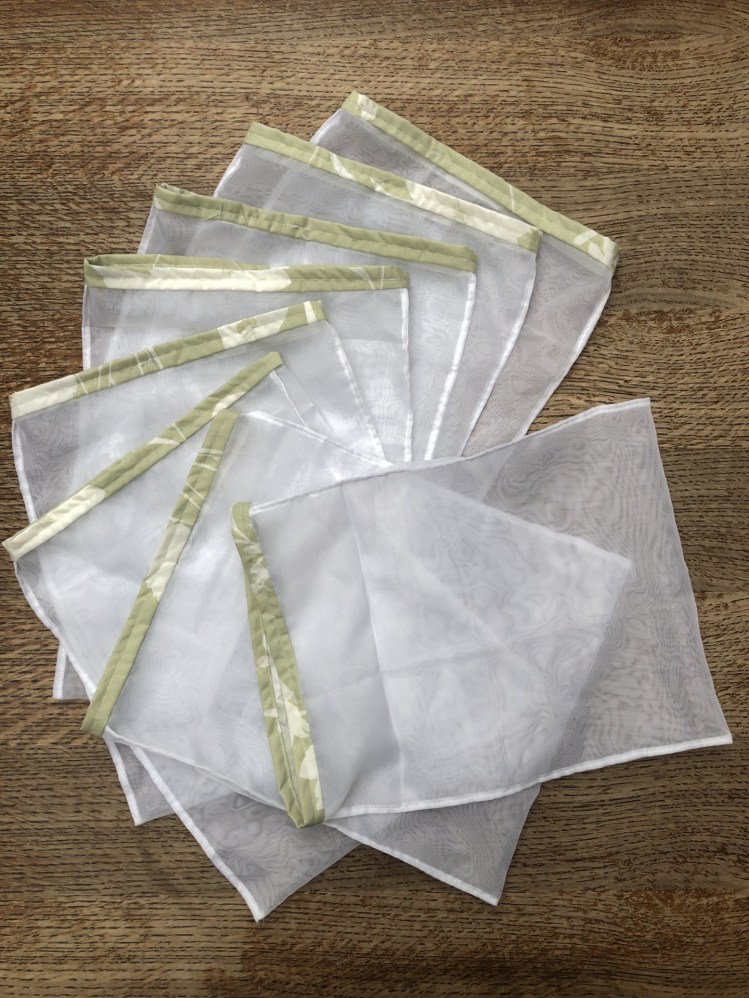
I reached a point where reusing those scrappy single-use plastic bags just felt wrong. So I grabbed a voile curtain, chopped it up into chunks, serged the sides, turned the bags inside out and stitched over the seams for extra strength. I bound the top edges. No bias cutting, no pre-ironing the binding strips, no handles, no drawstring. Just simple bags.
Of course, I just blazed ahead and made eight in one go without pausing to test whether they’d freak out the machines.
Each bag is roughly 33cm deep and 25cm across (about 50cm around). I avoided adding anything extra that might attract the camera’s attention and used a leftover piece of pale green sheet for the binding—low contrast and hopefully less suspicious.
Did they work?
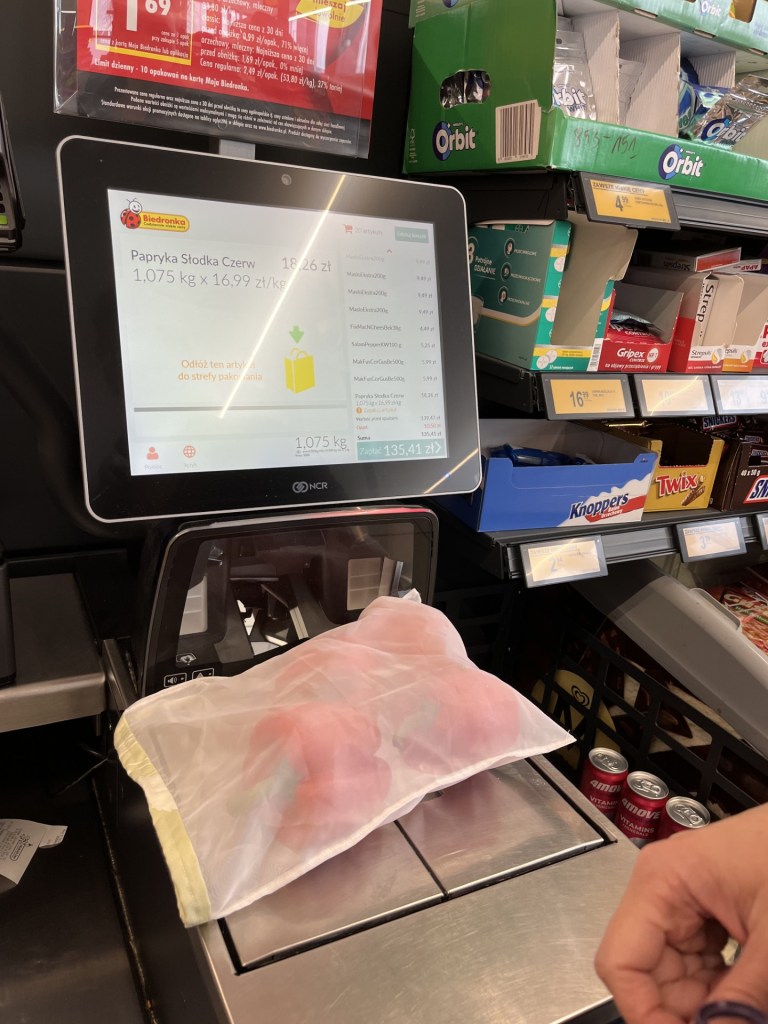
No, they bloody well didn’t. And it had all been going so well—right up until the last hurdle.
- I proudly (though hesitantly) chose to test them with red peppers. I figured if anything stood a chance of being recognised through the fabric, it would be a big, bold red pepper.
- The bags are roomy enough that, as long as you don’t stuff them to the brim, the lack of a drawstring or handles isn’t an issue.
- The checkout did recognise the red and even suggested the correct options—promising!
- I tapped the screen, watched as the “weighing” and “move item to bagging area” prompts appeared…
- I moved the bag over and—bam! A blurry image popped up with the dreaded message: “unexpected item in the bagging area.”
- Luckily, an employee was right there and cheerfully said, “I’ll rescue you!” (in Polish). And you know what? She actually did rescue the situation. That short, friendly exchange meant I left with a smile rather than a meltdown.
The moral of the story?
Don’t make eight bags before you’ve tested one.
Maybe try shopping somewhere that isn’t set up to push single-use plastic at every turn.
And maybe, just maybe, not everyone working in Biedronka has lost the will to live.
If you still want to make a similar bag—maybe using a different fabric if your checkout has eyes—here you go.
Basic Produce Bags – Sewing Steps
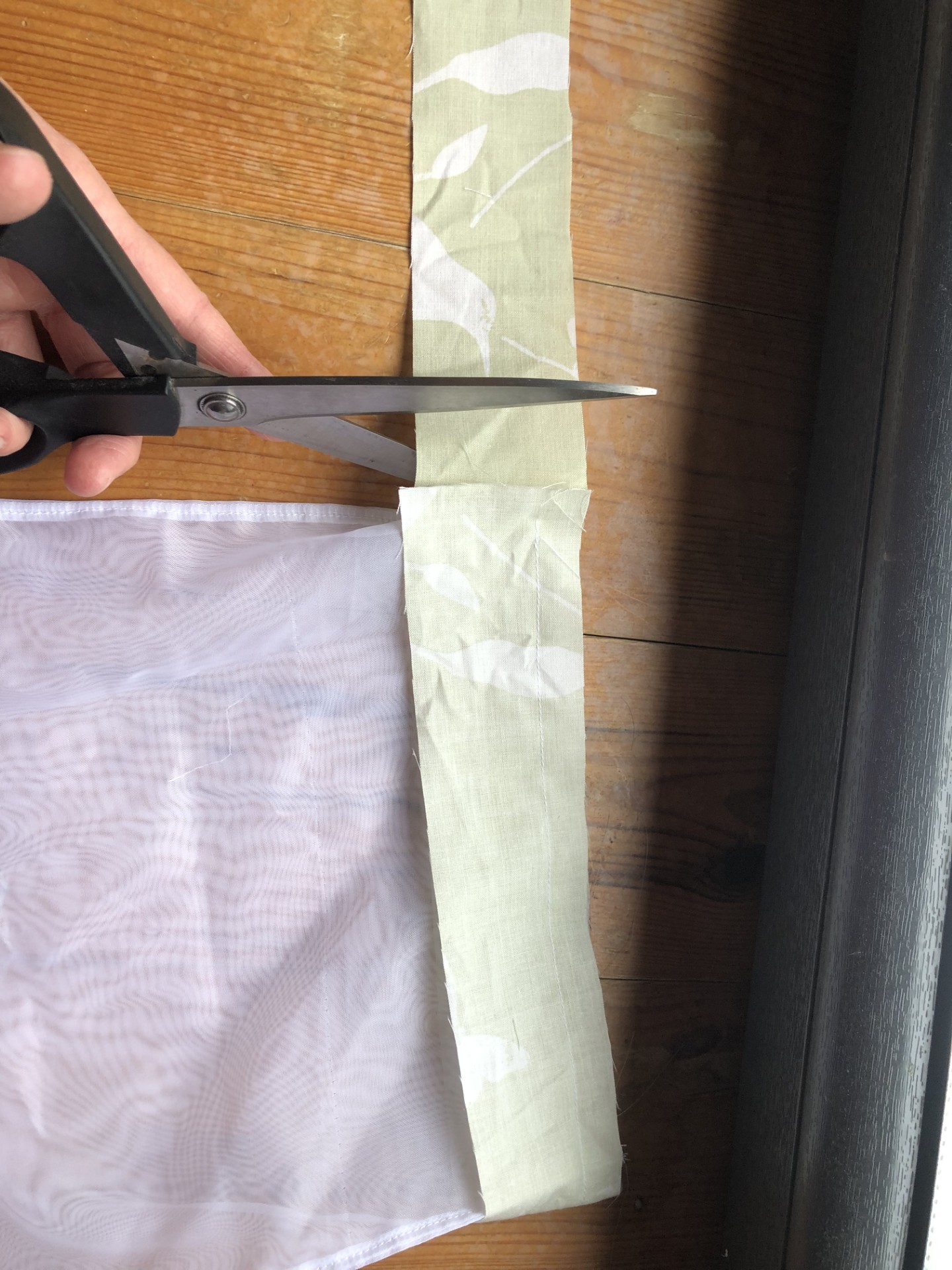
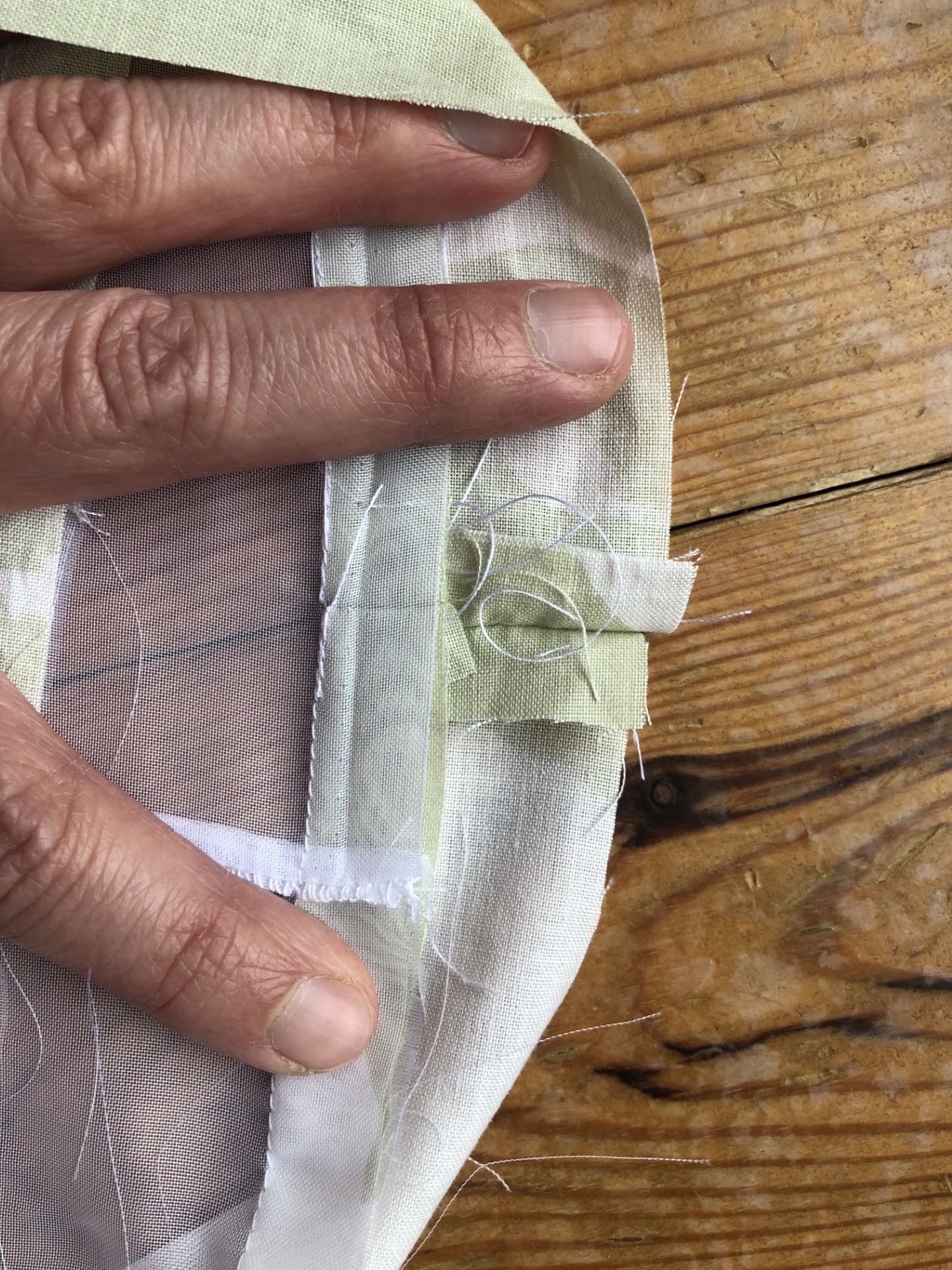
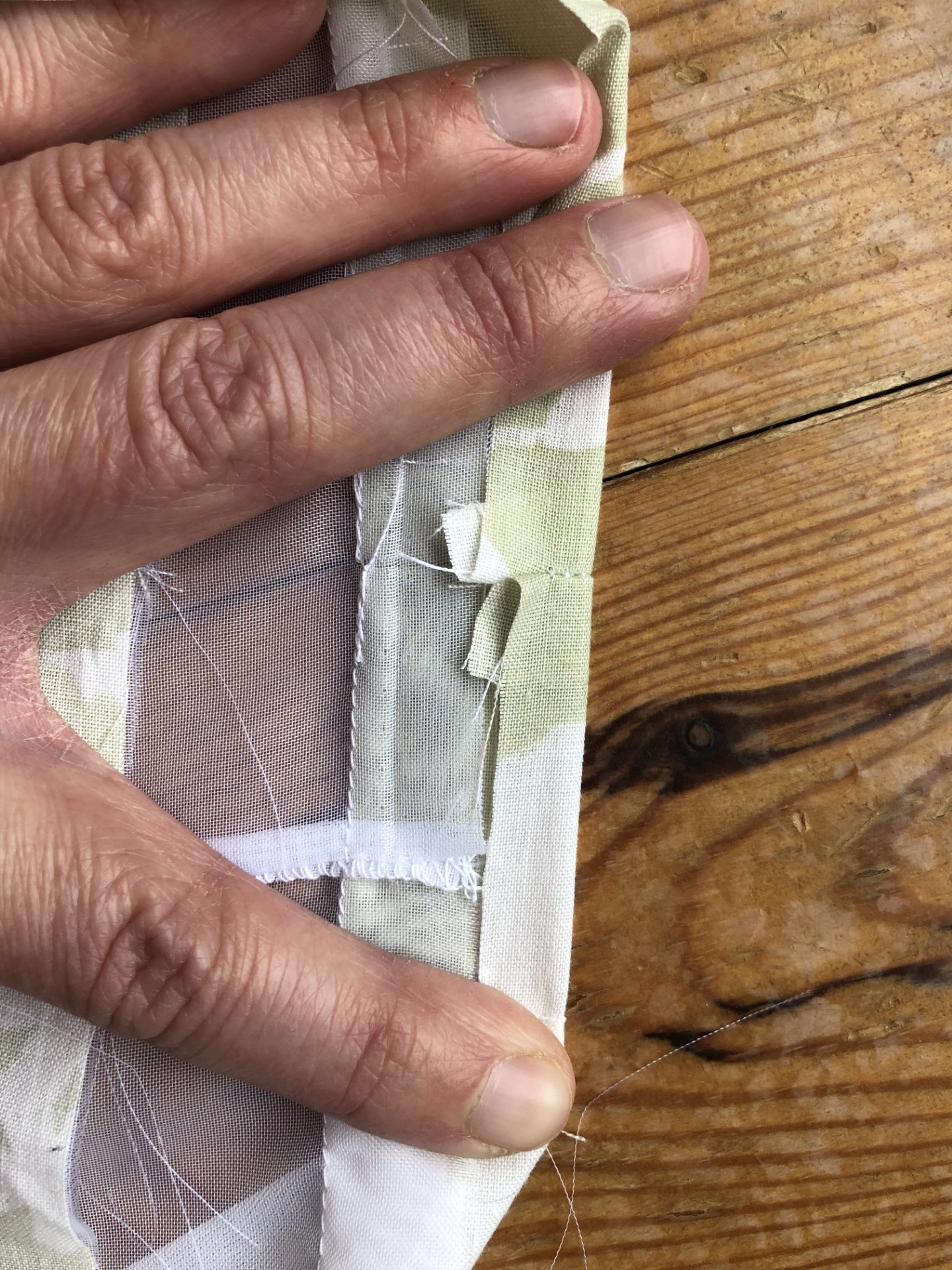
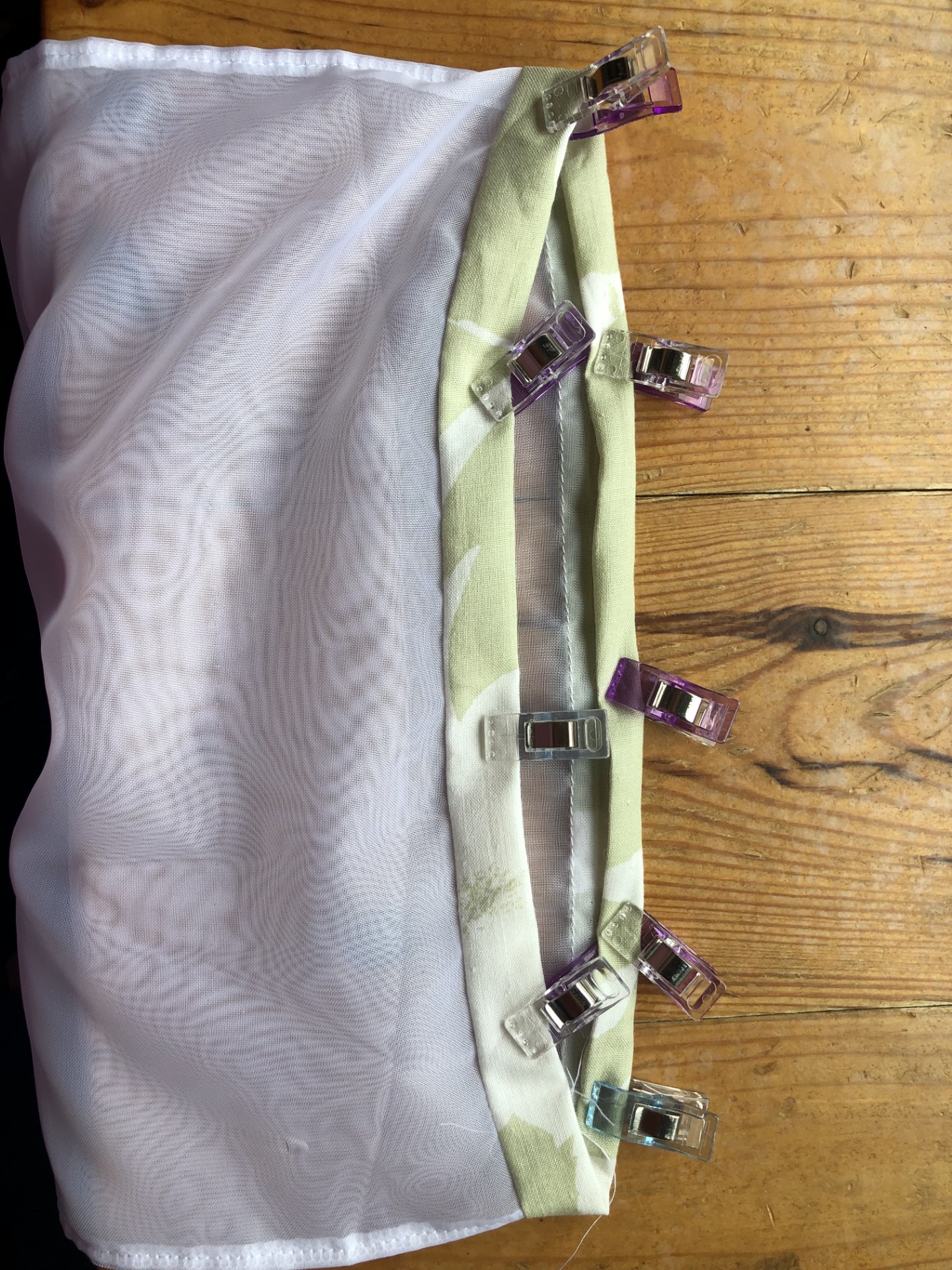
Here’s how I made mine. They’re intentionally simple and fast. You can adjust the size or finish details to suit your own setup.
- Cut your fabric.
Either divide your fabric equally with no waste, or cut strips roughly 66cm x 25cm if you like the size of mine. - Fold each strip in half lengthwise, right sides together.
- Sew the side seams.
Use a serger or a zigzag stitch to secure both long edges. - Turn the bag right side out.
- Reinforce the seams.
Sew down each side again, stitching through both layers of fabric and the seam allowance. This adds strength and stops the seam from pulling apart under weight. - Prepare the binding.
Cut strips at least 5cm (2 inches) wide. These don’t have to be bias strips since it’s a straight edge. - Attach the binding.
- With right sides together, line up the binding along the top edge of the bag.
- Don’t start exactly on a side seam AND start sewing about 1–2cm from the edge of the binding strip.
- Sew all the way around using a 1.5cm (5/8 inch) seam allowance. I didn’t mind that this made the inside edge narrower than the outside.
- Join the binding ends.
Trim the strip so you have about 1cm extra on each end. Sew the two ends together without catching the bag in the seam. - Enclose the raw edges.
- Open the seam where you joined the binding ends so it lies flat.
- Fold the binding upwards so it extends beyond the top of the bag.
- Then fold the outer edge of the binding down so its raw edge meets the raw edge of the bag.
- Fold the whole thing down again so everything is enclosed.
- Topstitch the binding.
With the inside of the bag facing up (so you can see what you’re doing), topstitch along the edge of the binding.
That’s it! I may now quietly mourn the fact that I didn’t use that black floral print binding—or add handles.
 Nicole's Professional Jumble