Why an alternate collective noun should be a philosophy of tadpoles
A short personal essay about good intentions, unintended consequences and looking for meaning.
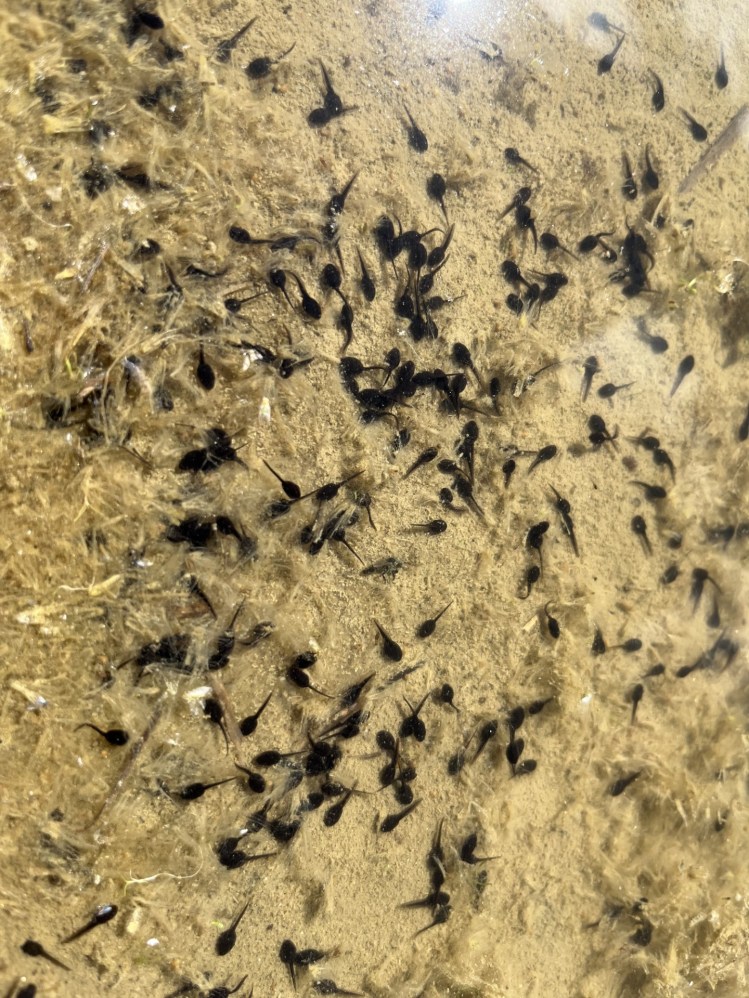
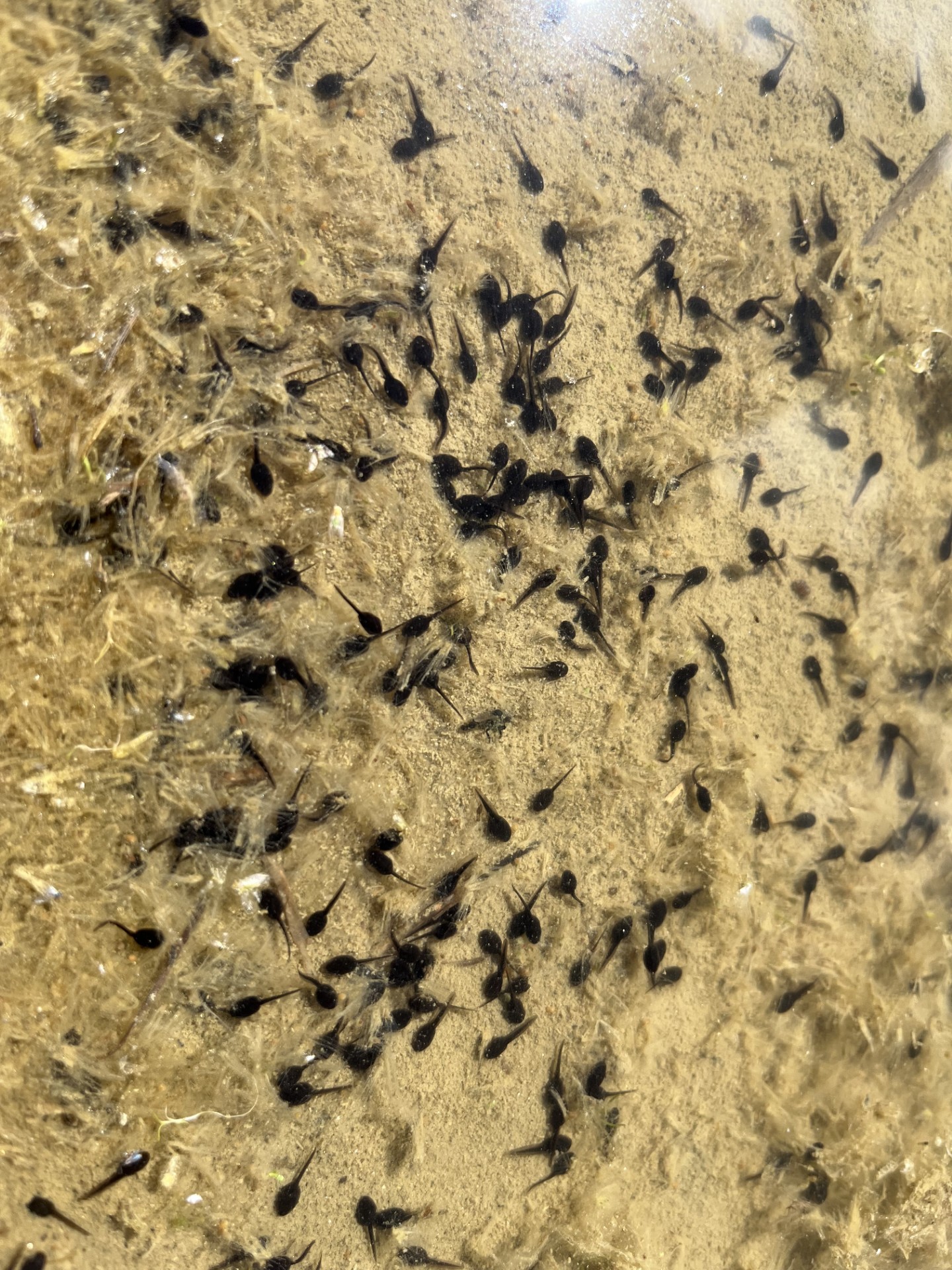
It happens every year. The perpetual(ish) puddle that my kids slide across on their bellies in winter and throw stones in during spring and autumn dries up in the summer. But not before some stubborn frogs lay a bunch of frogspawn in it. Many species return to the same place they spawned year after year, and apparently, common frogs can live upwards of seven years. Maybe they didn’t get the note about climate change and drier summers—still preferring to risk laying eggs in their familiar spots: ponds.
Now, I use the term pond loosely. What we’re really talking about is a divot in the ground on the edge of a quarry that routinely fills—or floods—with water. While I wouldn’t recommend messing around in active quarries, I’ve lived next door to this one for eight years. I walk around the edge with the dogs every day, so I’ve got a good sense of the land’s stability. Honestly, I’m not even sure how the place stays in business. Once every couple of months they seem to fire up the machines, but that’s about it.
We’ve collected tadpoles several times—feeding them dandelion leaves blanched in boiling water and dropped onto the surface of the tank. Once we have little froglets, we release them.
This year, we’re only just out of April showers and the pond is tiny. In my mind, this usually happens much later. While the water is often low and we often “rescue” tadpoles, I don’t think I’ve ever looked at it and thought, Hey, these guys are all doomed.
So I rallied/pestered/marshalled the kids into their wellies and we set off—two of us full of cold—with a large bucket and a scoop to rescue as many little wrigglers as we could.
It did not go according to plan.
The fine sandy soil around the edge of the puddle was like quicksand, spilling over our boots and working its way through any cracks. My son got stuck once by accident—and I mean really stuck. We had to use sticks to dig him out and rock the wellies back and forth. Then he got stuck twice more on purpose.
The water was so shallow that I had to scoop at a very shallow angle. If I moved too fast, I just got mud; too slow, and they wriggled away. The ripples from scooping also washed many up onto the mud, where they got stuck. I had to painstakingly pick them up or gently flick them back in.
The more I scooped and rescued, the lower the water level dropped. Then we had to carry—what I now realised was an excessively large 25L bucket—about 400 to 500 metres to the bottom of the quarry, where there’s a year-round pond. (Again, safety note: I know this quarry very well. I use the machine road and only did this when the quarry was closed.)
To replace the water we’d scooped out with the tadpoles, we carried a half-full bucket back up out of the quarry to refill the puddle.
We repeated the process again. But the more I tripped and fell at the edge of the puddle while rescuing tadpoles, the more the soggy quicksand ground shifted, distorting the puddle and stranding even more.
After the second load of tadpoles had been released—and we were covered toes to knees, fingers to elbows, and splattered everywhere in between—it was time to call it a day.
I felt bad walking away. But saving them all seemed impossible, because everything I did had unintended consequences. I tried to hold on to the image of all the tiny tadpoles swimming in the shallows of the pond at the bottom of the quarry, rather than those stranded on the mud, struggling to make it back into the water. We replenished the puddle one last time, hoping to give the others a bit more of a fighting chance. Then, with dripping noses and achy arms, we headed home.
The whole thing wouldn’t stop churning around in my head. It was like I had to make meaning out of it—learn a lesson, come to a conclusion. What an odd, overwhelming compulsion it is to assign meaning to an event.
Perhaps in caveman times or ancient Egypt, if I’d been contemplating this, I would have drawn a cave painting of wise tadpoles sent from above to teach me a lesson? Honestly, probably not. I’d be thinking about food. But throughout history, symbology and religion have assigned higher meaning to stories and events.
Now, I do believe in a God—but I also believe he’s a hands-off kind of guy. The nonsense we get up to is a result of our free will. If he kept stepping in, it would mean influencing people—and then free will wouldn’t exist. And what kind of test of character would that be? (Maybe he sends signs, but it’s still up to us to follow them.)
So as I pondered whether there was a deeper meaning, I also resisted the idea.
The next day, I missed my morning walk but went in the evening. The puddle was gone—completely churned up and destroyed by some of the quarry machinery during their bi-monthly parade.
Lesson?
There is no lesson. Just do good things—even if they’re hard—before the opportunity is gone.
 Nicole's Professional Jumble